Sage Grouse
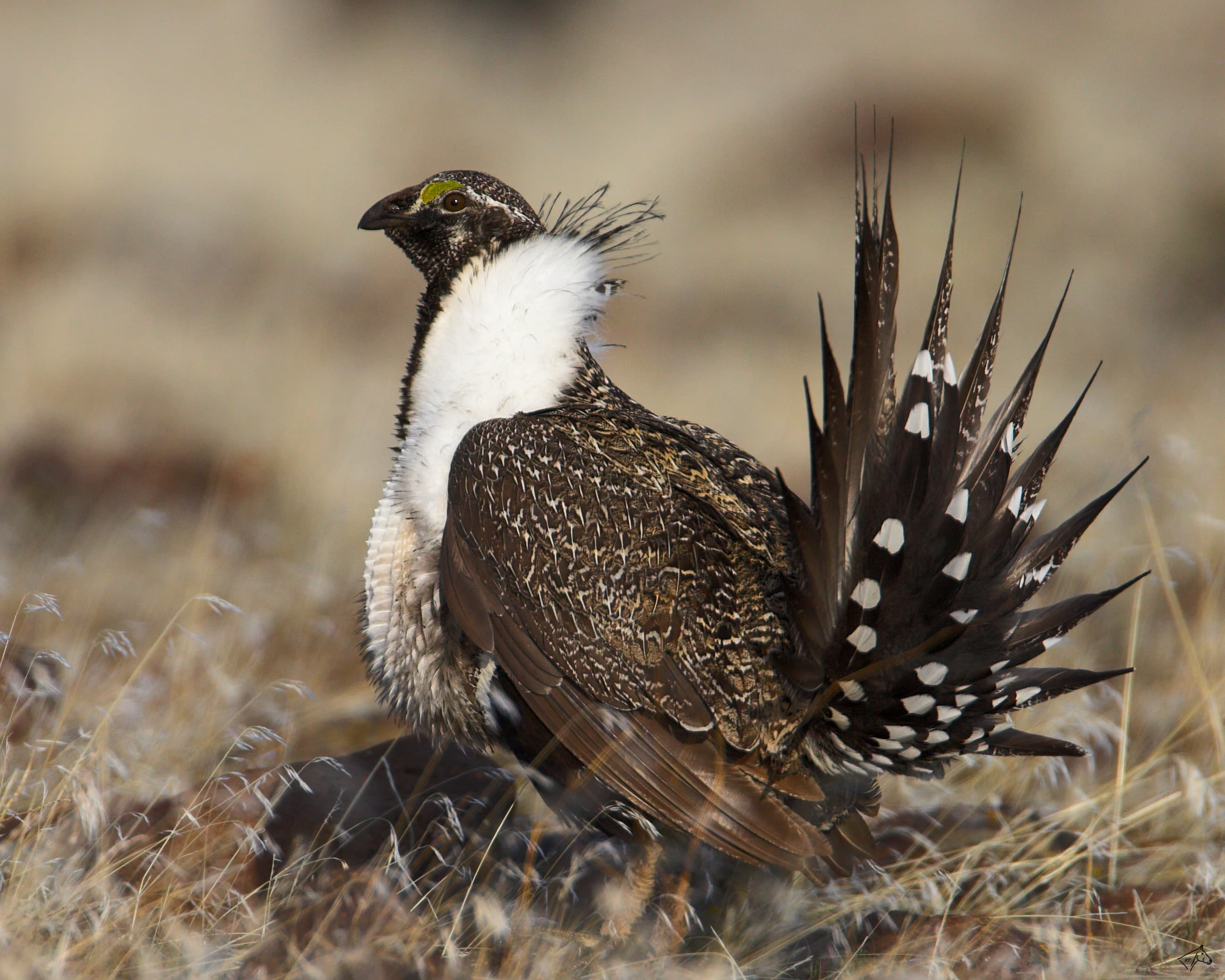
Image: <a rel="nofollow" class="external text" href="https://www.flickr.com/photos/54430347@N04">Pacific Southwest Region U.S. Fish and Wildlife Service</a> from Sacramento, US (Public domain)
NameSage Grouse
Common NameGreater Sage-Grouse
Scientific NameCentrocercus urophasianus
FamilyPhasianidae
Wingspan (cm)65
Length (cm)70
Weight (g)2500
Plumage DetailsMales have mottled brown, black, and white plumage on the back and wings, a black throat, a large white ruff around the neck, and a spiky, fanned tail with white spots. During display, two large yellowish-green air sacs inflate on the chest. Females are smaller and more cryptically mottled brown.
Vocalization / CallMales produce distinctive 'popping' and 'gurgling' sounds during their courtship displays on leks, created by the inflation and deflation of their gular air sacs. They also emit soft clucks and cackles.
Primary Dietomnivore
Primary Habitatssagebrush steppe, grassland
Conservation Statusnear-threatened
Geographic RangeFound in western North America, primarily in sagebrush ecosystems across states including Montana, Wyoming, Idaho, Nevada, Utah, Colorado, Oregon, Washington, and parts of California and Canada.
Identifying FeaturesLarge size, Spiky, fanned tail with white spots (especially males), White ruff and black throat (males), Yellowish-green inflatable air sacs (males during display), Mottled brown and white cryptic plumage, Strong association with sagebrush habitat
Description
The Greater Sage-Grouse is a large, ground-dwelling bird known for the elaborate courtship displays of the males. Males feature striking white breast feathers, a black throat, and inflatable yellowish-green air sacs used to produce booming sounds during their lek displays. They are strongly associated with sagebrush habitats.