Rufous Whistler
NameRufous Whistler
Common NameRufous Whistler
Scientific NamePachycephala rufiventris
FamilyPachycephalidae
Wingspan (cm)27.5
Length (cm)17
Weight (g)22.5
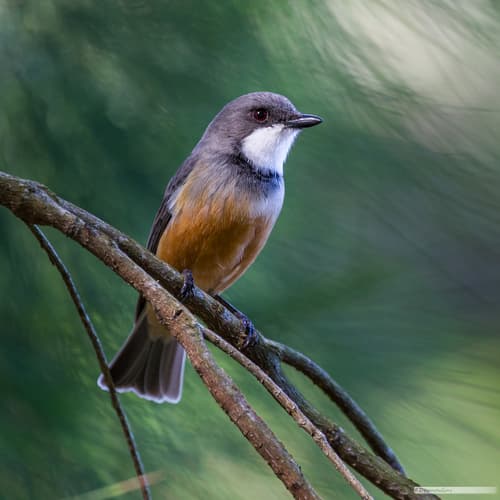
Plumage DetailsAdult males have a dark grey head and nape, a prominent white throat, and a broad black band across the upper breast. The underparts are a rich rufous, extending to the undertail coverts. The back and wings are grey, and the tail is dark grey. Females are duller, with grey-brown upperparts, a streaked whitish throat, and buffy-brown underparts.
Vocalization / CallKnown for its loud, ringing, and varied song, often described as a 'whip-crack' or 'e-chong' followed by a series of ringing whistles, sometimes ending with a 'joey-joey' sound. It also produces harsh alarm calls.
Primary Dietomnivore
Primary Habitatsforest, urban, coastal
Conservation Statusleast-concern
Geographic RangeWidespread across mainland Australia, Tasmania, and some islands, including New Guinea and surrounding archipelagos.
Identifying FeaturesMale's distinctive plumage: grey head, white throat, black breast band, rufous belly, Loud, ringing 'whip-crack' or 'e-chong' call, Dark red eye (in males), Active foraging behavior in trees and shrubs
Description
The Rufous Whistler is a medium-sized passerine known for its striking male plumage and loud, melodious call. Males feature a grey head, white throat, black breast band, and rufous underparts, while females are duller. They are active foragers, typically found in the canopy and understory of various wooded habitats.