Razorbill
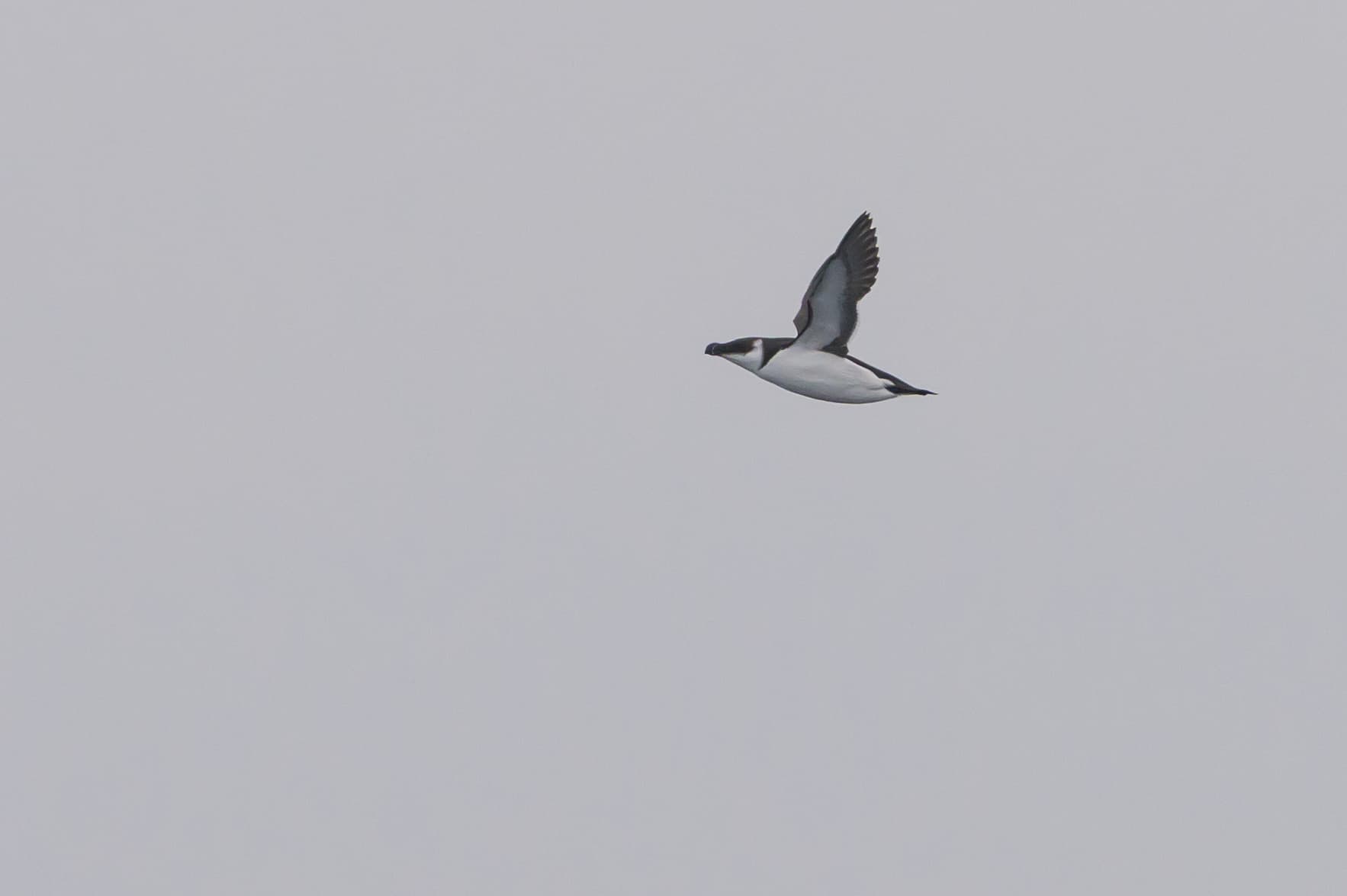
Image: Stephen John Davies (cc-by-nc)
NameRazorbill
Common NameRazorbill
Scientific NameAlca torda
FamilyAlcidae
Wingspan (cm)65
Length (cm)40.5
Weight (g)650
Plumage DetailsBreeding adults have glossy black upperparts, head, and throat, sharply contrasting with pure white underparts. A prominent thin white line runs vertically across the bill, and another white line extends from the eye to the bill. Non-breeding birds have white throats and cheeks.
Vocalization / CallGenerally silent at sea, Razorbills produce a variety of guttural growls, grunts, and croaking sounds at their breeding colonies, often described as 'arrr' or 'karrr'.
Primary Dietpiscivore
Primary Habitatscoastal marine, rocky islands, sea cliffs, offshore waters
Conservation Statusleast-concern
Geographic RangeBreeds on rocky coasts and islands across the North Atlantic, from eastern North America (e.g., Newfoundland, Labrador) to Greenland, Iceland, and northern Europe (e.g., British Isles, Scandinavia, Russia). Winters mainly offshore in temperate waters.
Identifying FeaturesDeep, laterally compressed bill with a prominent white vertical line (breeding plumage), Black upperparts and white underparts, White line from eye to bill (breeding plumage), Short, pointed tail, Upright posture on land
Description
The Razorbill is a medium-sized, black and white seabird known for its distinctive deep, flattened bill. These expert divers use their wings to propel themselves underwater, hunting for fish and crustaceans in coastal and offshore waters.