Philippine Hawk-Cuckoo
NamePhilippine Hawk-Cuckoo
Common NamePhilippine Hawk-Cuckoo
Scientific NameHierococcyx pectoralis
FamilyCuculidae
Wingspan (cm)45
Length (cm)30
Weight (g)80
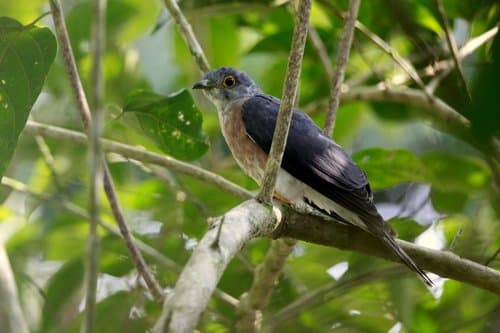
Plumage DetailsAdults have a grey head, nape, and upperparts, with darker grey wings and tail. The breast and flanks are rufous, transitioning to white on the belly and undertail coverts. It features a distinct yellow orbital ring around the eye and a dark bill with a yellowish base.
Vocalization / CallIts vocalization is typically a series of clear, whistling notes, often described as 'pip-pip-pip-pip-pew' or 'pee-pee-pee-pee-pew', which can accelerate or descend in pitch.
Primary Dietinsectivore
Primary Habitatsforest
Conservation Statusleast-concern
Geographic RangeEndemic to the Philippines, found across various islands including Luzon, Mindanao, Samar, Leyte, Negros, and Panay, inhabiting tropical moist lowland and montane forests.
Identifying FeaturesGrey head and upperparts, Rufous breast and flanks, White belly, Yellow orbital ring, Hawk-like appearance, Dark bill with yellowish base
Description
The Philippine Hawk-Cuckoo is a medium-sized cuckoo known for its elusive nature, often found in the canopy of tropical forests. It exhibits a hawk-like appearance, particularly in flight, which helps it blend into its environment. This species is an obligate brood parasite, laying its eggs in the nests of other bird species.