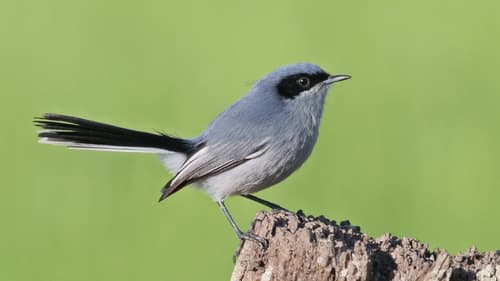
Masked Gnatcatcher
NameMasked Gnatcatcher
Common NameMasked Gnatcatcher
Scientific NamePolioptila dumicola
FamilyPolioptilidae
Wingspan (cm)11
Length (cm)11.5
Weight (g)6
Plumage DetailsMales have a prominent black mask covering the lores and extending behind the eye, contrasting with a blue-gray crown and upperparts. The underparts are whitish to pale gray. The long tail is black with white outer tail feathers. Females are similar but lack the distinct black mask, having a duller gray face.
Vocalization / CallVocalizations include soft, thin, high-pitched 'tsee' or 'swee' notes, often given in a rapid series. They may also produce chattering or scolding calls when agitated.
Primary Dietinsectivore
Primary Habitatsforest, grassland
Conservation Statusleast-concern
Geographic RangeFound in South America, primarily in central and eastern Bolivia, Paraguay, northern Argentina, and southwestern Brazil. It inhabits dry forests, chaco woodlands, and scrubby areas.
Identifying FeaturesBlack facial mask (male), Slender body, Long black tail with white outer feathers, Blue-gray upperparts, Active foraging behavior
Description
The Masked Gnatcatcher is a small, slender songbird known for its active foraging behavior. Males display a distinctive black mask, contrasting with their blue-gray plumage and long, often cocked tail. They primarily feed on insects and spiders, gleaning them from foliage.