Lapland Longspur
NameLapland Longspur
Common NameLapland Longspur
Scientific NameCalcarius lapponicus
FamilyCalcariidae
Wingspan (cm)25
Length (cm)15
Weight (g)26
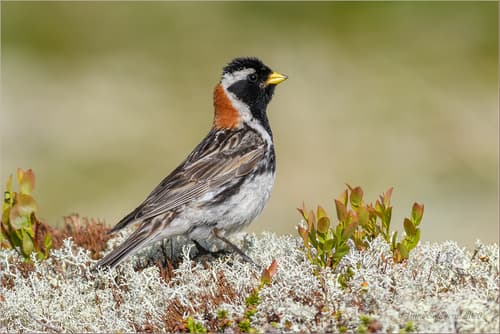
Plumage DetailsBreeding males have a black head, throat, and breast, a prominent white stripe behind the eye, and a rich rufous nape and collar. The back is streaked brown, and the belly is white. The bill is yellow with a dark tip. Females and non-breeding males are duller, with streaked brown plumage and less distinct head patterns.
Vocalization / CallIts call is a distinctive, rattling 'tew' or 'prrrrt'. The song is a sweet, tinkling warble, often given in flight.
Primary Dietomnivore
Primary Habitatstundra, grassland
Conservation Statusleast-concern
Geographic RangeBreeds in the arctic and subarctic regions of North America, Europe, and Asia. Winters in temperate grasslands and agricultural fields across the central and southern United States, southern Canada, parts of Europe, and central Asia.
Identifying Featuresblack head and throat (breeding male), white supercilium (stripe behind eye), rufous nape/collar, yellow bill (breeding male), streaked brown back, long hind claw (characteristic of longspurs), ground-dwelling behavior
Description
The Lapland Longspur is a small, ground-dwelling passerine bird, known for its striking breeding plumage in males. It primarily inhabits open tundra and grasslands, foraging for seeds and insects. During winter, it forms large flocks in agricultural fields.