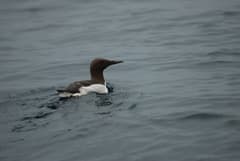
King Eider
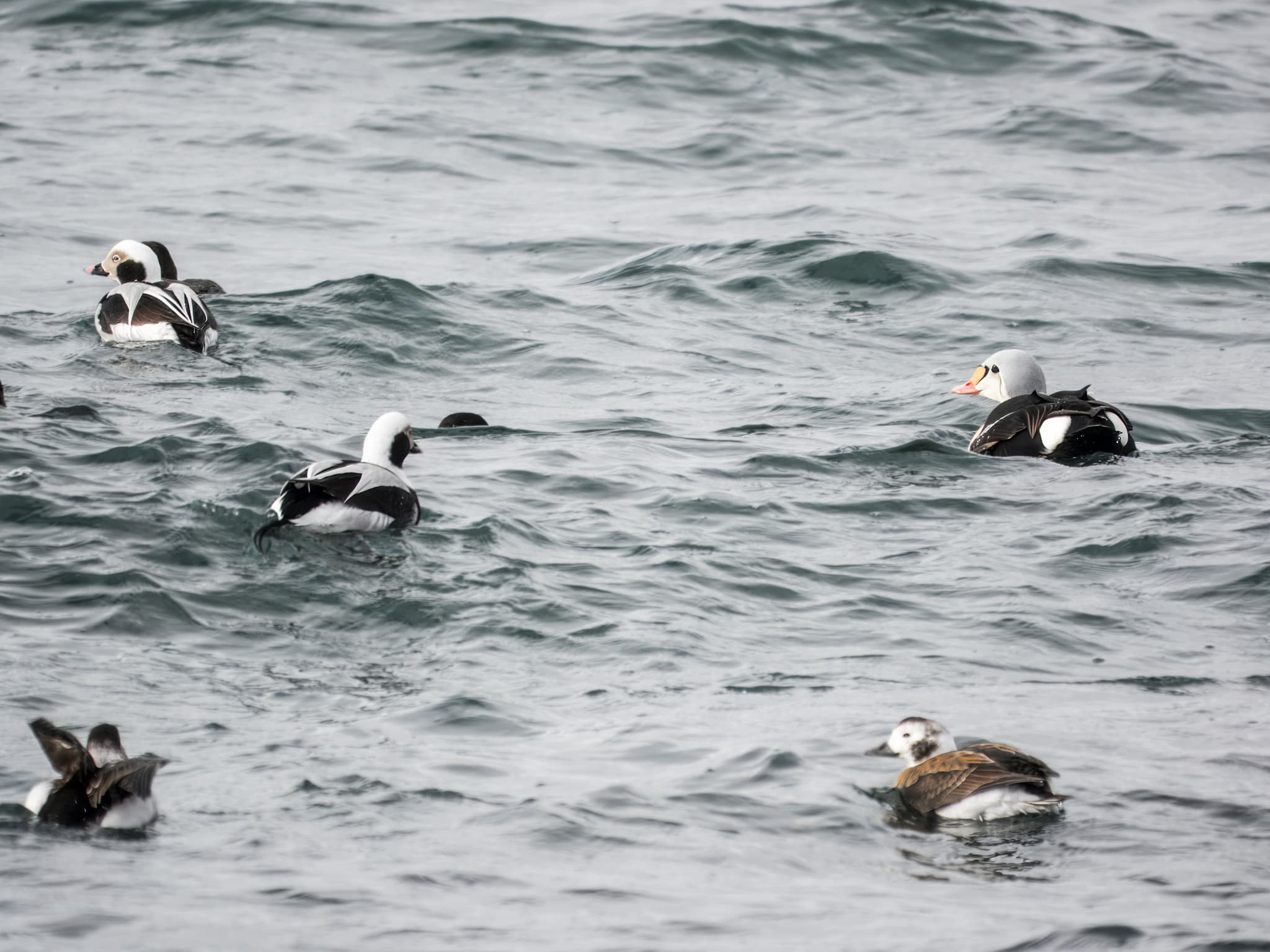
Image: gordsheard (cc-by-nc)
NameKing Eider
Common NameKing Eider
Scientific NameSomateria spectabilis
FamilyAnatidae
Wingspan (cm)94
Length (cm)60
Weight (g)1700
Plumage DetailsAdult males have a striking pale grey-blue crown and nape, green patches on the cheeks, and a prominent orange frontal shield on the bill. Their body is largely black with a white breast and white patches on the back. Females are mottled brown overall, with a less pronounced bill structure and often a pale patch around the eye.
Vocalization / CallMales produce a soft, cooing 'hoo-hoo-hooo' call, particularly during courtship. Females typically have a harsh, croaking 'karr-karr-karr' sound.
Primary Dietcarnivore
Primary Habitatsarctic coastal waters, tundra, marine environments
Conservation Statusleast-concern
Geographic RangeCircumpolar Arctic, breeding on tundra in North America, Greenland, Iceland, and Eurasia. They winter in ice-free coastal waters, often congregating in large flocks in areas like the Bering Sea, North Atlantic, and Baltic Sea.
Identifying FeaturesMale: large orange frontal shield on bill, Male: pale grey-blue crown and nape, Male: green cheek patches, Male: black body with white breast and back patches, Female: mottled brown plumage, Female: wedge-shaped bill, Stocky body shape
Description
The King Eider is a large, stocky sea duck known for its distinctive appearance, especially the male's colorful head and bill. These Arctic birds are powerful divers, feeding primarily on marine invertebrates in cold coastal waters.