Ivory Gull
NameIvory Gull
Common NameIvory Gull
Scientific NamePagophila eburnea
FamilyLaridae
Wingspan (cm)107.5
Length (cm)41.5
Weight (g)575
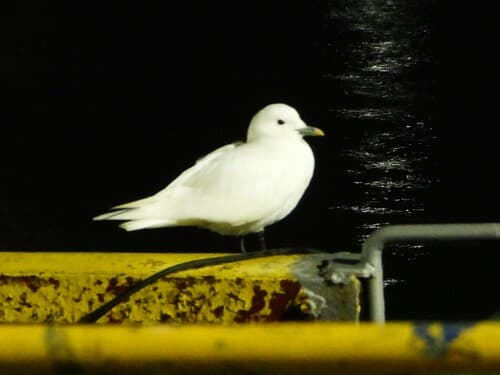
Plumage DetailsAdults are entirely pure white, giving them their distinctive name. The bill is yellowish with a dark grey or black base, and the legs are black. Juveniles have some dark spotting on the face and wings, which fades to white with age.
Vocalization / CallVocalizations include harsh, high-pitched, gull-like calls, often described as 'kree-a' or 'kwa'. They also produce a variety of other squawks and growls.
Primary Dietomnivore
Primary Habitatsarctic, coastal, marine, pack ice
Conservation Statusnear-threatened
Geographic RangeThe Ivory Gull has a circumpolar distribution in the High Arctic, breeding on remote islands and coasts of Greenland, Canada, Russia, and Svalbard. During winter, it typically remains near the edge of the pack ice, occasionally venturing further south.
Identifying Featurespure white plumage (adults), dark legs, bicolored bill (yellow tip, dark base), small size for a gull, association with ice and arctic environments
Description
The Ivory Gull is a striking medium-sized gull of the High Arctic, known for its entirely pure white plumage in adulthood. It is typically found in association with pack ice and open water, often scavenging on carrion left by polar bears and seals. This species is highly adapted to extreme cold environments.