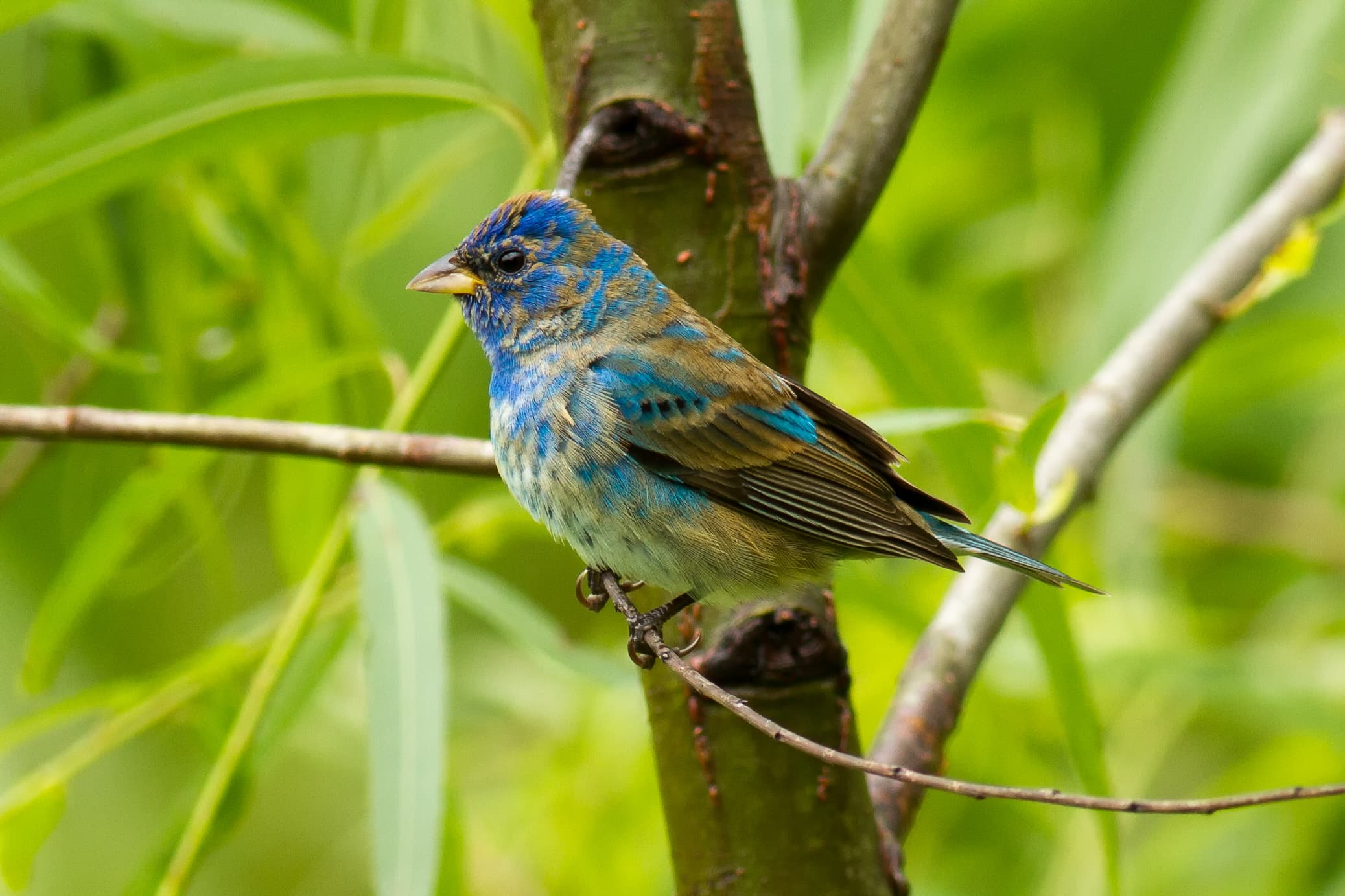
Indigo Bunting
Image: <a href="//commons.wikimedia.org/wiki/User:Frank_Schulenburg" title="User:Frank Schulenburg">Frank Schulenburg</a> (CC BY-SA 4.0)
NameIndigo Bunting
Common NameIndigo Bunting
Scientific NamePasserina cyanea
FamilyCardinalidae
Wingspan (cm)20.5
Length (cm)13.25
Weight (g)15
Plumage DetailsAdult males are entirely brilliant indigo blue, appearing almost black in poor light. Females are plain brown with faint streaking on the breast and sometimes a hint of blue on the wings or tail. Juvenile males, like the one in the image, exhibit a mottled pattern of blue and brown, with blue typically more prominent on the head, rump, and wings.
Vocalization / CallThe song is a high-pitched, sweet, and rapid warble, often described as 'sweet-sweet-chew-chew-sweet-sweet' with paired notes. Their common call is a sharp 'chip' note.
Primary Dietomnivore
Primary Habitatsforest edge, shrubland, grassland, fields
Conservation Statusleast-concern
Geographic RangeBreeds across eastern North America from southern Canada to the Gulf Coast. Winters in southern Florida, Mexico, Central America, and the Caribbean.
Identifying Featuresadult male's vibrant indigo blue plumage, conical bill, female's plain brown plumage with faint streaking, distinctive warbling song, migratory behavior
Description
The Indigo Bunting is a small, migratory songbird known for the brilliant blue plumage of the adult male. Females are plain brown, while juvenile males, like the one pictured, show a mix of blue and brown. They typically forage for insects and seeds in dense vegetation along forest edges and fields.