Indigo Bunting
Image: mtart (cc-by-nc)
NameIndigo Bunting
Common NameIndigo Bunting
Scientific NamePasserina cyanea
FamilyCardinalidae
Wingspan (cm)20
Length (cm)13
Weight (g)14.5
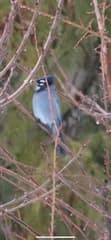
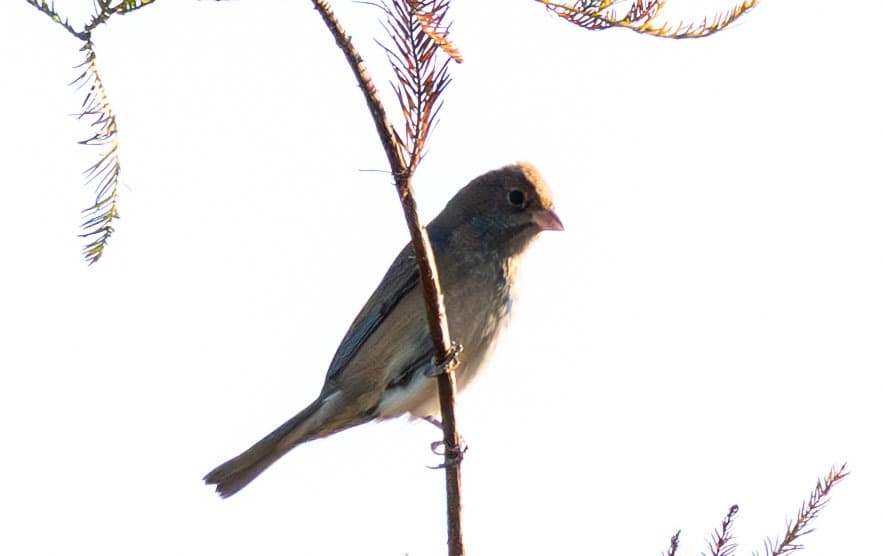
Plumage DetailsAdult males are entirely brilliant, iridescent blue, appearing blackish in poor light. Females are mostly dull brown with faint streaking on the breast and a bluish wash on the wings and tail, sometimes with a pale throat. Juveniles resemble females.
Vocalization / CallThe song is a high-pitched, rapid, jumbled series of paired notes, often described as 'sweet-sweet, chew-chew, sweet-sweet'. Their call is a sharp 'spik' or 'chip'.
Primary Dietomnivore
Primary Habitatsopen woodlands, forest edges, shrubby fields, overgrown clearings, roadsides
Conservation Statusleast-concern
Geographic RangeBreeds across eastern North America, from southern Canada to the Gulf Coast. Winters in southern Florida, Mexico, Central America, and the Caribbean.
Identifying FeaturesMales are brilliant blue, Females are brownish with bluish wash on wings/tail, Conical bill, Often flicks tail, Distinctive paired-note song
Description
The Indigo Bunting is a small, finch-like songbird. Males are a striking iridescent blue during breeding season, while females are a duller brown with subtle blue hints on the wings and tail. They are migratory birds, often found in open woodlands and shrubby areas.