Horned Lark
Image: chris buelow (cc-by-nc)
NameHorned Lark
Common NameHorned Lark
Scientific NameEremophila alpestris
FamilyAlaudidae
Wingspan (cm)33.5
Length (cm)18
Weight (g)38
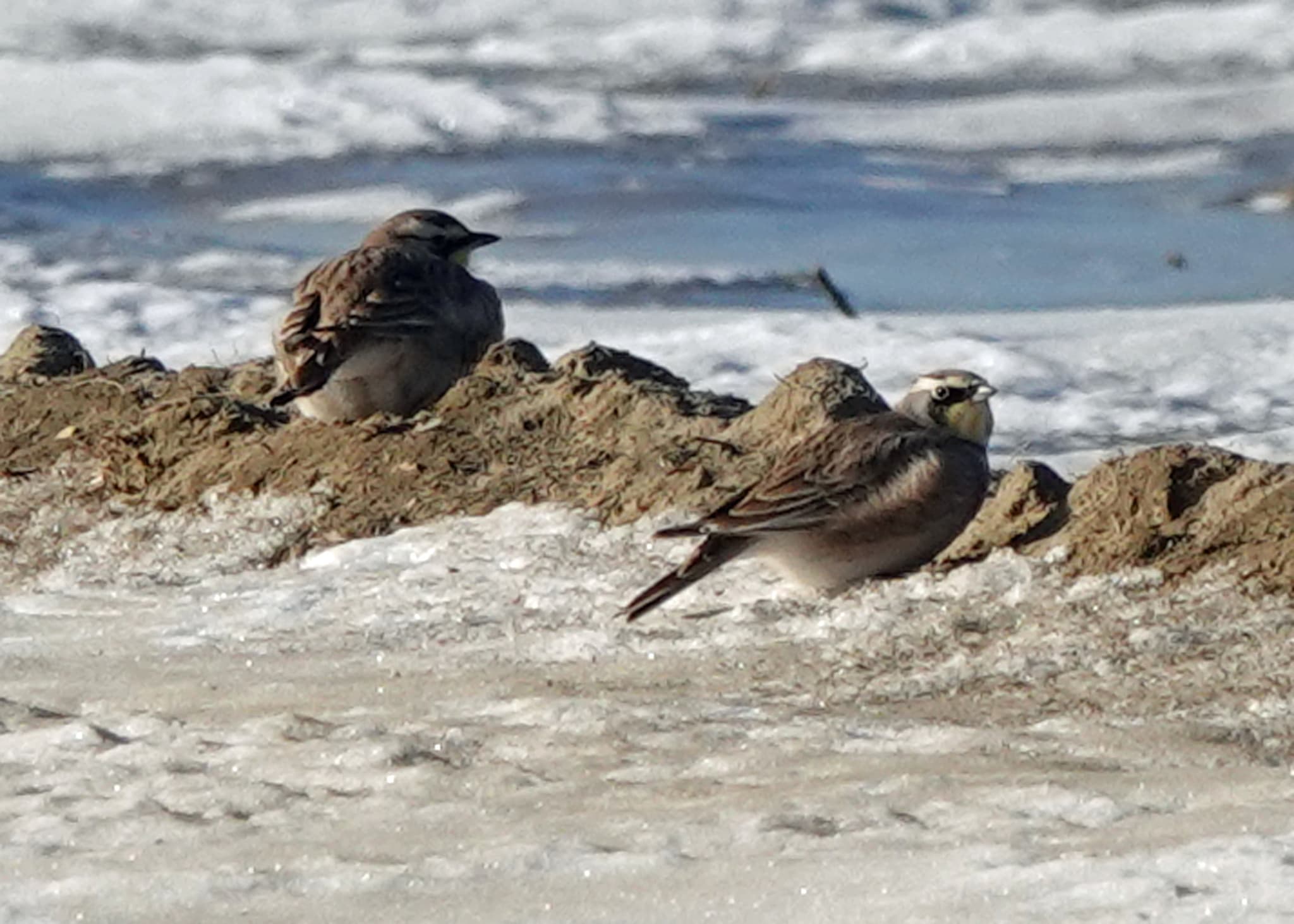
Plumage DetailsUpperparts are streaky brown to pinkish-brown, contrasting with pale underparts. The head features a distinctive black mask, a yellow or white face, and small black feather tufts ("horns") above the eyes. The throat is typically yellow or white, bordered by a black bib, and the tail is dark with white outer feathers.
Vocalization / CallTheir call is a high-pitched, tinkling, or lisping "tseep" or "tsee-tsee," often given in flight. The song is a series of high-pitched, jumbled notes and trills, typically delivered during an aerial display flight.
Primary Dietomnivore
Primary Habitatsgrassland, tundra, prairie, agricultural land, open fields, desert
Conservation Statusleast-concern
Geographic RangeWidespread across North America, with breeding populations extending into the Arctic tundra. Also found in parts of Europe and Asia, making it the only lark species native to the Americas. Migratory in northern parts of its range, but resident in many temperate areas.
Identifying Featuresblack feather tufts (horns), black facial mask, yellow or white face and throat, streaky brown upperparts, ground-dwelling behavior, open, treeless habitat preference
Description
The Horned Lark is a small, ground-dwelling songbird characterized by its distinctive black and yellow/white facial patterns and small feather tufts resembling horns. It forages primarily on the ground in open, treeless environments, often seen walking or running rather than hopping. These birds are well-adapted to cold climates, often remaining in snowy areas throughout winter.