Hooded Gnateater
NameHooded Gnateater
Common NameHooded Gnateater
Scientific NameConopophaga roberti
FamilyConopophagidae
Wingspan (cm)20
Length (cm)12.5
Weight (g)27.5
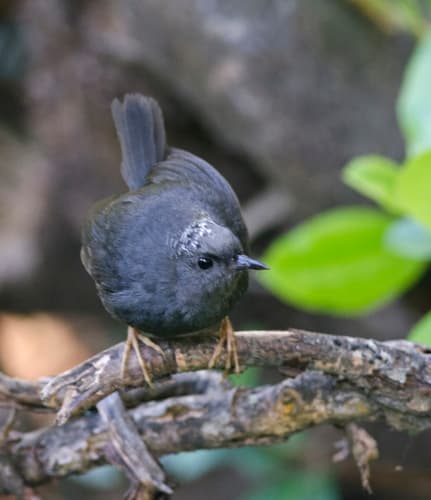
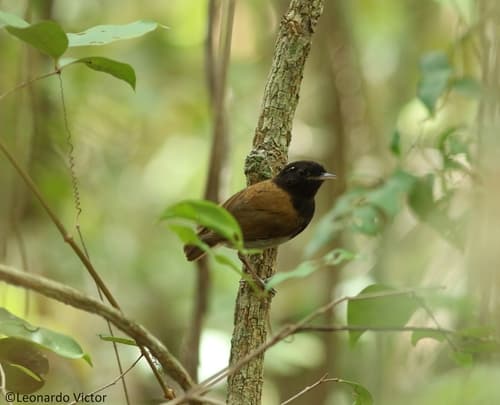
Plumage DetailsMales have a glossy black head, throat, and upper breast, forming a distinct 'hood.' The rest of the upperparts are rufous-brown, with grayish flanks and belly. A small white tuft is often present behind the eye. Females are duller, with a rufous-brown head and upperparts, and paler underparts.
Vocalization / CallVocalizations include a series of soft, whistled notes, often described as a rising 'peeeu' or a trilling 'tew-tew-tew.' Calls are generally quiet and can be difficult to locate in dense forest.
Primary Dietinsectivore
Primary Habitatsforest
Conservation Statusleast-concern
Geographic RangeEndemic to a relatively small region of eastern Brazil, primarily within the Atlantic Forest biome, ranging from southern Bahia south to Espírito Santo.
Identifying FeaturesSmall, plump body with short tail, Male's distinctive black hood contrasting with rufous-brown body, Often a white tuft behind the eye (male), Terrestrial or low-perching behavior in dense forest understory, Soft, whistled calls
Description
The Hooded Gnateater is a small, plump bird found in the understory of humid lowland forests. It typically hops on the ground or low branches, flicking its short tail, and sallying out to catch insects. Males are distinguished by their striking black hood.