Herring Gull
NameHerring Gull
Common NameHerring Gull
Scientific NameLarus argentatus
FamilyLaridae
Wingspan (cm)144
Length (cm)61
Weight (g)975
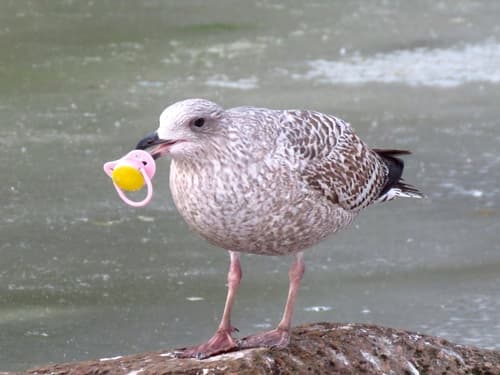
Plumage DetailsJuvenile plumage (as seen in image) is mottled brown and grey with darker primaries, a dark bill, and pinkish-grey legs. Adult plumage features a white head and underparts, a grey back and upperwings, black wingtips with white spots, a yellow bill with a red spot on the lower mandible, and pink legs.
Vocalization / CallVocalizations include a loud, raucous 'kyow' call, a series of 'ga-ga-ga' notes, and a distinctive long call often given with the head thrown back.
Primary Dietomnivore
Primary Habitatscoastal, estuaries, harbors, beaches, cliffs, agricultural land, urban areas, landfills, inland lakes, rivers
Conservation Statusleast-concern
Geographic RangeWidespread across Europe, western Asia, and parts of North America, often found along coastlines, inland waters, and urban environments.
Identifying FeaturesLarge size and robust build, Adults have grey back, white head, black wingtips with white spots, yellow bill with red spot, pink legs, Juveniles are mottled brown with a dark bill and pinkish-grey legs, Loud, distinctive calls, Opportunistic feeding behavior
Description
The Herring Gull is a large, robust gull commonly found in coastal and inland areas. Juveniles, like the one pictured, exhibit mottled brown plumage, while adults are characterized by a grey back and white underparts. They are highly opportunistic feeders, often seen scavenging.