Image: <ul><li><a href="//commons.wikimedia.org/wiki/File:Falco_rusticolus_white.jpg" title="File:Falco rusticolus white.jpg">Falco_rusticolus_white.jpg</a>: <a rel="nofollow" class="external text" href="https://www.flickr.com/people/22816007@N08">Ólafur Larsen</a></li>
<li>derivative work: <a href="//commons.wikimedia.org/wiki/User:Bogbumper" title="User:Bogbumper">Bogbumper</a> (<a href="//commons.wikimedia.org/wiki/User_talk:Bogbumper" title="User talk:Bogbumper"><span class="signature-talk">talk</span></a>)</li></ul> (CC BY-SA 2.0)
NameGyrfalcon
Common NameGyrfalcon
Scientific NameFalco rusticolus
FamilyFalconidae
Wingspan (cm)130
Length (cm)56.5
Weight (g)1450
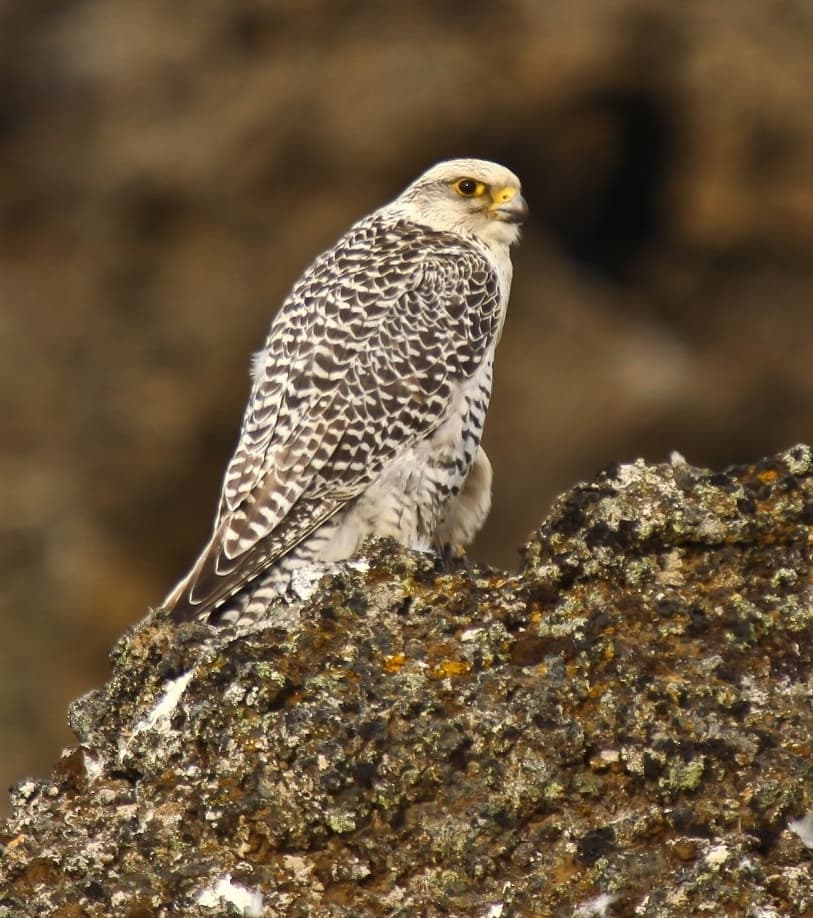
Plumage DetailsPlumage is highly variable, ranging from nearly pure white (as seen in the image, known as the white morph) to dark grey or brown. White morphs typically have a white body with varying degrees of dark barring or spotting on the back, wings, and tail. All morphs feature yellow cere and feet.
Vocalization / CallVocalizations include harsh, rapid 'kak-kak-kak' calls, particularly when agitated or defending a nest. They also produce softer 'wii-chup' calls.
Primary Dietcarnivore
Primary Habitatstundra, arctic, subarctic, cliffs, rocky coasts
Conservation Statusleast-concern
Geographic RangeCircumpolar Arctic and subarctic regions across North America, Europe, and Asia, including Greenland, Iceland, northern Canada, Alaska, Scandinavia, and Siberia.
Identifying Featureslarge size, pointed wings, powerful flight, variable plumage (white, grey, brown morphs), yellow cere and feet, dark barring on back and wings (especially in white morphs)