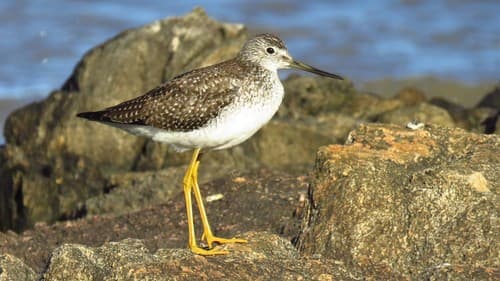
Greater Yellowlegs
NameGreater Yellowlegs
Common NameGreater Yellowlegs
Scientific NameTringa melanoleuca
FamilyScolopacidae
Wingspan (cm)60
Length (cm)35
Weight (g)210
Plumage DetailsAdults in breeding plumage have mottled dark brown and white upperparts with heavy streaking on the neck and breast, and white underparts. Non-breeding plumage is duller, more grayish-brown above with less distinct spotting. Juveniles resemble non-breeding adults but with more distinct spotting on the back. All plumages feature bright yellow legs and a long, dark, slightly upturned bill.
Vocalization / CallA distinctive, loud, clear 'tew-tew-tew' or 'kew-kew-kew' call, often given in a series of three notes, which is a key identification feature.
Primary Dietcarnivore
Primary Habitatsforest, wetland, coastal
Conservation Statusleast-concern
Geographic RangeBreeds across Alaska and Canada's boreal forest. Winters along the coasts of the southern United States, Central America, South America, and the Caribbean.
Identifying FeaturesLong, bright yellow legs, Long, slender, slightly upturned bill, Spotted/streaked upperparts and white underparts, Loud, clear three-note call, Larger size compared to Lesser Yellowlegs
Description
The Greater Yellowlegs is a large, elegant shorebird characterized by its strikingly long, bright yellow legs and a relatively long, slightly upturned bill. It typically forages in shallow water, often sweeping its bill side-to-side to catch small aquatic prey.