Great Knot
NameGreat Knot
Common NameGreat Knot
Scientific NameCalidris tenuirostris
FamilyScolopacidae
Wingspan (cm)62
Length (cm)27.5
Weight (g)190
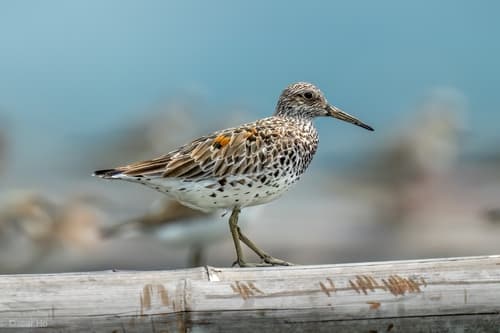
Plumage DetailsIn breeding plumage, the Great Knot has heavily mottled black, rufous, and grey-brown upperparts with prominent black barring and rufous patches on the back and scapulars. The underparts are white, heavily spotted and barred with black, particularly on the breast and flanks. Non-breeding birds are duller, with grey-brown upperparts and less distinct spotting on the underparts.
Vocalization / CallIts typical call is a low, guttural 'knut' or 'knoo', often given in flight or when disturbed.
Primary Dietcarnivore
Primary Habitatscoastal, wetland, tundra
Conservation Statusendangered
Geographic RangeBreeds in the high Arctic tundra of northeastern Siberia. Migrates south along the East Asian-Australasian Flyway, wintering in coastal areas of Southeast Asia and Australia.
Identifying Featuresrelatively large size for a 'knot', long, slightly decurved bill, heavily spotted underparts in breeding plumage, rufous patches on scapulars in breeding plumage, stocky build
Description
The Great Knot is a large, stocky shorebird with a relatively long, slightly decurved bill. It is known for its extensive migratory journeys along the East Asian-Australasian Flyway, often foraging in large flocks on coastal mudflats.