Great Horned Owl
NameGreat Horned Owl
Common NameGreat Horned Owl
Scientific NameBubo virginianus
FamilyStrigidae
Wingspan (cm)122
Length (cm)55
Weight (g)1700
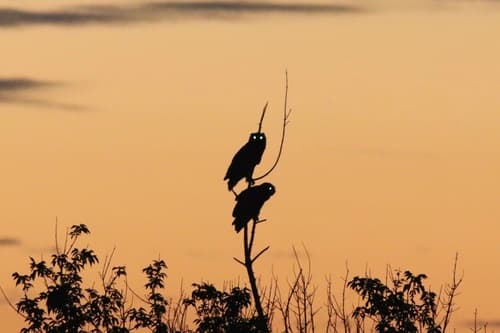
Plumage DetailsPlumage is typically mottled brown, gray, and white, providing excellent camouflage in varied environments. It features a distinctive white throat patch and prominent, widely spaced feather tufts on its head, often mistaken for ears.
Vocalization / CallIts characteristic call is a deep, resonant series of hoots, often rendered as 'hoo-hoo-hooo hoo hoo,' with the middle hoot being longer. Males and females often engage in duets.
Primary Dietcarnivore
Primary Habitatsforest, woodland, desert, grassland, urban, suburban
Conservation Statusleast-concern
Geographic RangeWidespread throughout North and South America, from the Arctic tree line south to Tierra del Fuego.
Identifying Featuresprominent ear tufts, large size, yellow eyes, deep hooting call, nocturnal hunting
Description
The Great Horned Owl is a large and powerful nocturnal predator, easily recognized by its prominent ear tufts and deep, resonant hoot. Highly adaptable, it inhabits a wide range of environments across the Americas, preying on various small to medium-sized animals.