Emperor Penguin
NameEmperor Penguin
Common NameEmperor Penguin
Scientific NameAptenodytes forsteri
FamilySpheniscidae
Wingspan (cm)82.5
Length (cm)115
Weight (g)30000
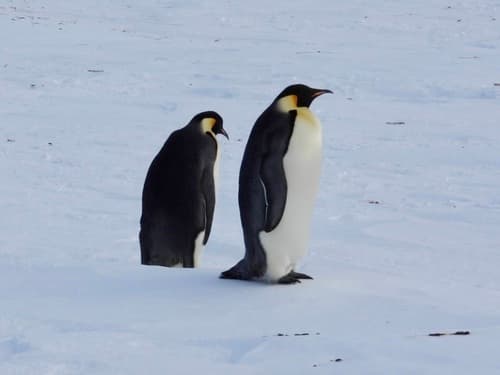
Plumage DetailsAdults have a black back and head, a white belly, and a pale yellow breast that fades to white. Distinctive golden-orange ear patches are present on the sides of the neck, extending to the upper chest.
Vocalization / CallEmperor Penguins communicate with a complex repertoire of calls, including trumpeting, squawking, and chirping sounds. These vocalizations are crucial for individual recognition, especially between parents and chicks in crowded colonies.
Primary Dietpiscivore
Primary Habitatscoastal, tundra
Conservation Statusnear-threatened
Geographic RangeBreeds exclusively in Antarctica, on sea ice and land, and forages in the surrounding Southern Ocean.
Identifying Featureslargest penguin species, black back and head, white belly and pale yellow breast, golden-orange ear patches, long, slender, slightly down-curved bill
Description
The Emperor Penguin is the largest of all penguin species, known for its striking black and white plumage with distinctive golden-orange patches on its neck. These highly social birds are superb swimmers and divers, spending much of their lives in the frigid Antarctic waters.