Burrowing Owl
NameBurrowing Owl
Common NameBurrowing Owl
Scientific NameAthene cunicularia
FamilyStrigidae
Wingspan (cm)55
Length (cm)23.5
Weight (g)190
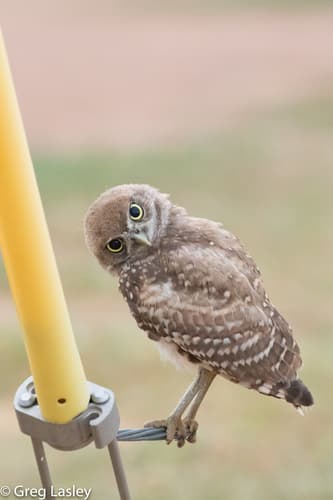
Plumage DetailsAdults have brown upperparts with white spotting and barring, and pale underparts with brown barring on the flanks and breast. Juveniles, like the one pictured, are plainer brown above and buffy below, with less distinct barring and a fluffy appearance.
Vocalization / CallVocalizations include a two-note 'coo-coooo' song, chattering alarm calls, and a hiss that mimics a rattlesnake when threatened in its burrow.
Primary Dietcarnivore
Primary Habitatsgrassland, prairie, desert, agricultural fields, open areas
Conservation Statusleast-concern
Geographic RangeFound across North and South America, from southern Canada through the western United States, Mexico, Central America, and much of South America.
Identifying Featuressmall size, long legs, bright yellow eyes, no ear tufts, ground-dwelling, head-bobbing behavior, diurnal activity
Description
The Burrowing Owl is a small, long-legged owl often seen standing on the ground or low perches. Unlike most owls, it is active during the day and nests in underground burrows, often abandoned by other animals. This species is known for its distinctive head-bobbing behavior.