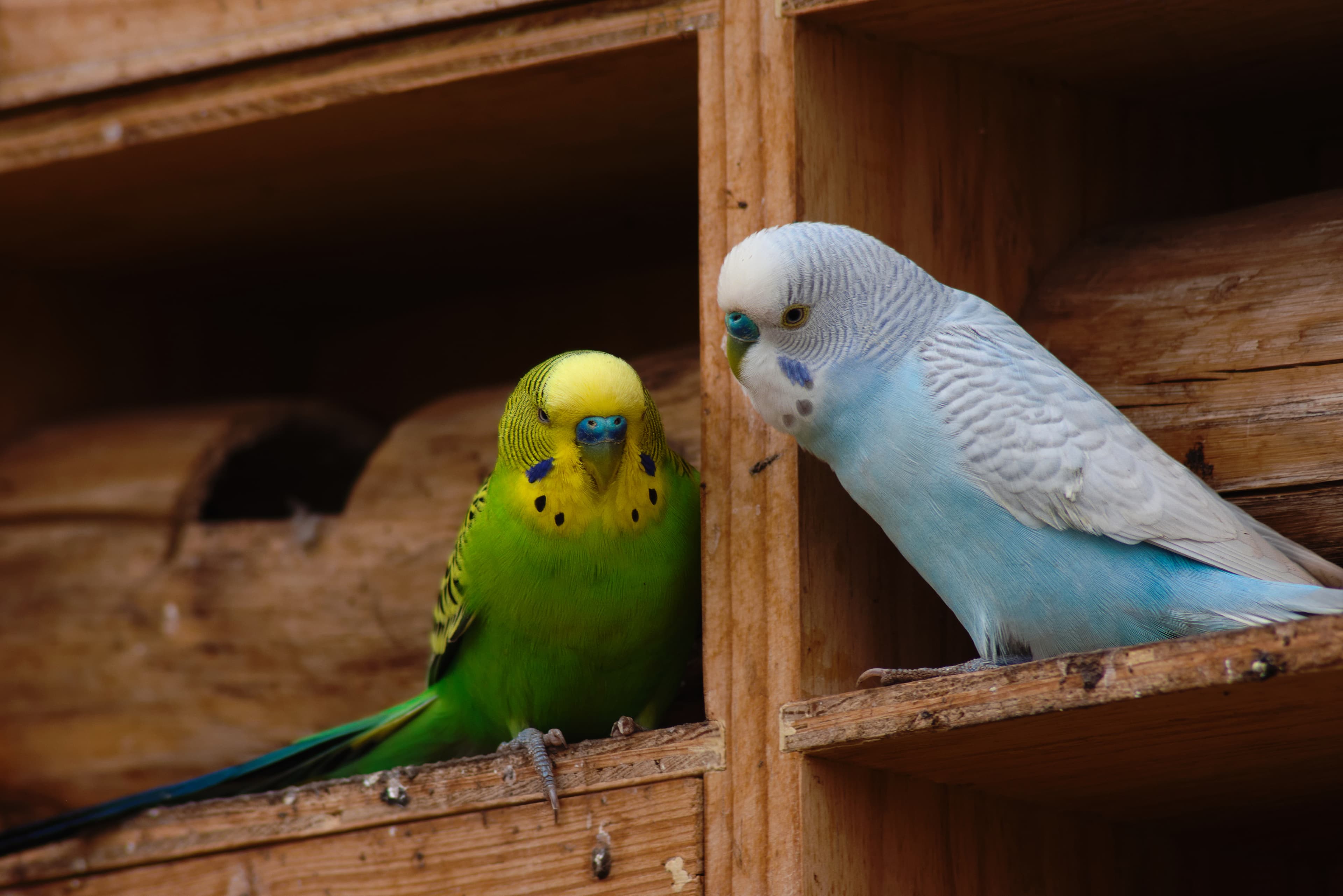
Budgerigar
Image: Carlos Valenzuela (CC BY-SA 4.0)
NameBudgerigar
Common NameBudgerigar
Scientific NameMelopsittacus undulatus
FamilyPsittaculidae
Wingspan (cm)32
Length (cm)18
Weight (g)35
Plumage DetailsWild type Budgerigars have a bright green body, a yellow head, and black barring on the nape, back, and wing coverts. They feature blue cheek patches and three black spots on each side of the throat. Captive birds exhibit a wide array of color mutations, including blue, white, yellow, and grey, as seen with the blue individual in the image.
Vocalization / CallBudgerigars produce a variety of soft warbles, chirps, twitters, and chattering sounds, often delivered rapidly. They are also known for their ability to mimic sounds and human speech.
Primary Dietgranivore
Primary Habitatsforest, grassland
Conservation Statusleast-concern
Geographic RangeEndemic to inland Australia, Budgerigars are found across most of the continent, avoiding only the coastal areas, northern tropical regions, and the far southwest. They are highly nomadic, following rainfall and seed availability.
Identifying FeaturesSmall size, Long tapered tail, Yellow head with black barring (wild type), Green body (wild type), Blue cere (males), Black spots on throat, Undulating black markings on back and wings
Description
The Budgerigar is a small, long-tailed parrot native to Australia, known for its vibrant plumage and highly social nature. These adaptable birds are often kept as pets worldwide and are characterized by their undulating black markings on the back and wings. They typically feed on grass seeds and are found in large flocks in their natural habitat.