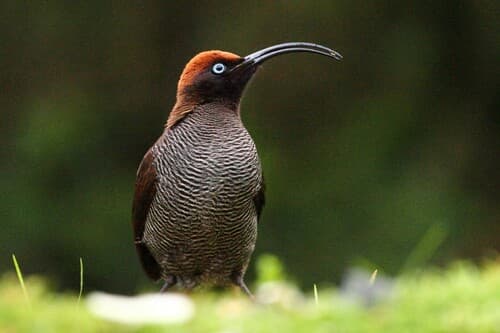
Brown Sicklebill
NameBrown Sicklebill
Common NameBrown Sicklebill
Scientific NameEpimachus meyeri
FamilyParadisaeidae
Wingspan (cm)45
Length (cm)96
Weight (g)250
Plumage DetailsMales have a rufous-brown crown and upperparts, a dark brown to black throat and breast, and finely barred dark brown and buffy-white underparts. The most striking feature is the iridescent blue eye-ring. Females are similar but generally smaller and lack the elongated flank plumes of the male.
Vocalization / CallIts call is a loud, far-carrying series of harsh, guttural 'wok-wok-wok' notes, often accelerating into a rapid, mechanical-sounding rattle or cackle.
Primary Dietomnivore
Primary Habitatsforest, mountain
Conservation Statusleast-concern
Geographic RangeEndemic to the montane forests of New Guinea, found in the central highlands and southeastern mountain ranges.
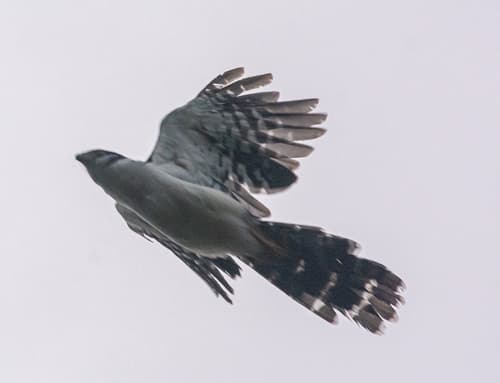
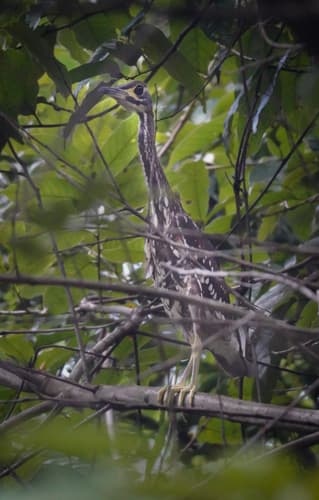
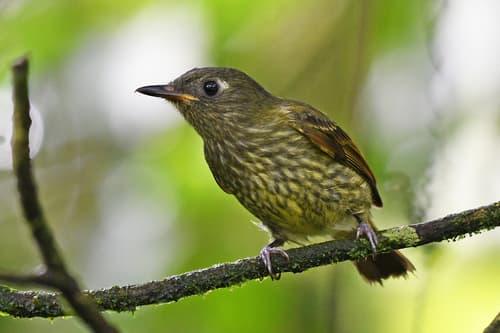
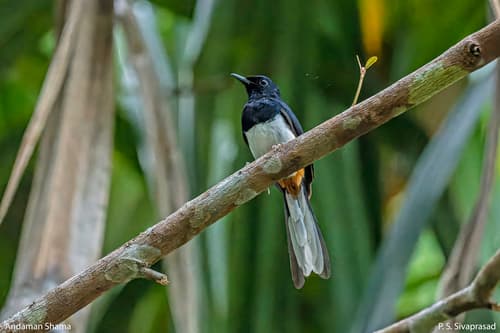
Identifying FeaturesExtremely long, strongly decurved black bill, Iridescent blue eye-ring, Rufous-brown crown and upperparts, Finely barred dark brown and buffy-white underparts, Long, graduated tail
Description
The Brown Sicklebill is a large bird-of-paradise known for its exceptionally long, decurved bill and striking plumage. It forages primarily in the mid-story and canopy of montane forests, using its specialized bill to probe for food.