Yellow-legged Gull
NameYellow-legged Gull
Common NameYellow-legged Gull
Scientific NameLarus michahellis
FamilyLaridae
Wingspan (cm)130
Length (cm)56
Weight (g)950
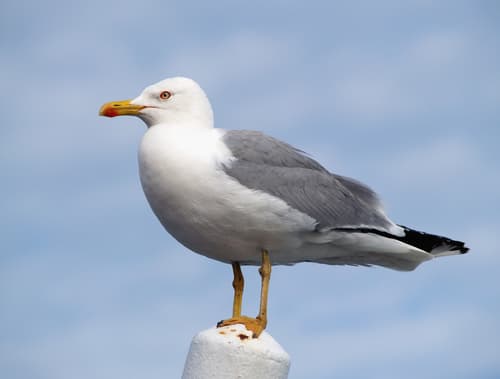
Plumage DetailsAdults have a white head, neck, underparts, and tail. The back and upperwings are medium grey, contrasting with black primary feathers that have white tips. The strong yellow bill features a prominent red spot on the lower mandible, and the legs are bright yellow. The eyes are pale, often with a red orbital ring.
Vocalization / CallVocalizations include loud, deep 'kyaow' calls, often given in a series, similar to other large gulls but typically deeper. They also produce a long, wailing 'hoo-hoo-hoo' call.
Primary Dietomnivore
Primary Habitatscoastal, urban, wetland
Conservation Statusleast-concern
Geographic RangeBreeds primarily around the Mediterranean Basin, including Southern Europe, North Africa, and the Middle East. Its range extends along the Atlantic coast of Europe and into parts of the Black Sea. It is largely resident but can disperse more widely during winter.
Identifying FeaturesBright yellow legs, Strong yellow bill with red spot, Pale eye with red orbital ring, Medium grey back, White head and underparts
Description
The Yellow-legged Gull is a large gull species characterized by its bright yellow legs and a robust yellow bill with a distinctive red spot. It is an opportunistic and adaptable bird, commonly found in coastal areas, urban environments, and near human settlements where it forages for a wide variety of food.