Wilson's Phalarope
NameWilson's Phalarope
Common NameWilson's Phalarope
Scientific NamePhalaropus tricolor
FamilyScolopacidae
Wingspan (cm)38
Length (cm)23
Weight (g)50
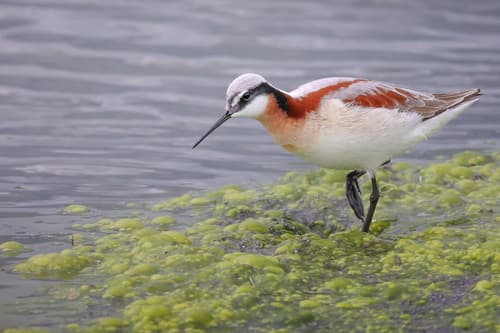
Plumage DetailsBreeding females have a gray crown, a black stripe extending from the eye down the neck, and a rich rufous-chestnut stripe along the sides of the neck and back. The underparts are white, and the back is mottled gray-brown. Males are duller, with a paler gray crown and less vibrant rufous markings. Non-breeding birds are mostly gray above and white below.
Vocalization / CallTypically quiet, but can produce a low, nasal 'wunk' or 'whit' call, especially during alarm or flight. Also a soft 'quirt' or 'kek' sound.
Primary Dietinsectivore
Primary Habitatswetland, grassland
Conservation Statusleast-concern
Geographic RangeBreeds in the prairies and wetlands of western North America, from southern Canada to the western United States. Migrates long distances to winter in saline lakes and coastal lagoons of South America, primarily in Argentina, Bolivia, and Chile.
Identifying Featureslong, needle-like black bill, lobed toes for swimming, distinctive black eye-stripe extending down the neck (breeding plumage), rufous-chestnut stripe on neck and back (breeding female), spinning feeding behavior on water
Description
The Wilson's Phalarope is a medium-sized shorebird known for its unique feeding behavior of spinning in circles on the water to stir up food. Females are typically brighter than males, especially during the breeding season, and exhibit reversed sexual roles where males primarily incubate eggs and care for young.