Wilson's Indigobird
NameWilson's Indigobird
Common NameWilson's Indigobird
Scientific NameVidua wilsoni
FamilyViduidae
Wingspan (cm)19
Length (cm)10.5
Weight (g)10.5
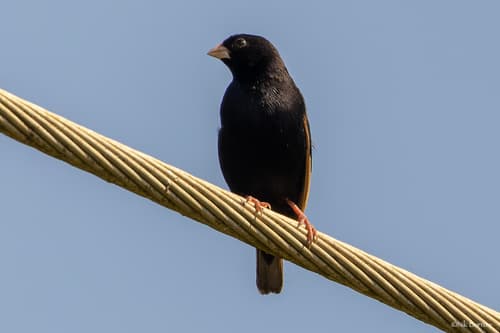
Plumage DetailsBreeding males are entirely glossy black with a pale, conical bill and reddish-orange legs. Non-breeding males and females are duller, streaky brown with a pale supercilium, a darker bill, and pale legs.
Vocalization / CallThe male's song incorporates mimicry of the calls and songs of its host species, the Orange-cheeked Waxbill, often including a rapid series of high-pitched notes and trills.
Primary Dietgranivore
Primary Habitatsgrassland, urban
Conservation Statusleast-concern
Geographic RangeFound across West and Central Africa, from Senegal east to Sudan and south to Angola, typically in open habitats.
Identifying Featuresglossy black plumage (breeding male), pale conical bill, reddish-orange legs, brood parasitic behavior, mimics Orange-cheeked Waxbill calls
Description
A small, brood parasitic passerine, the male Wilson's Indigobird in breeding plumage is entirely glossy black with a pale bill and reddish legs. It is known for mimicking the calls of its host species, the Orange-cheeked Waxbill, to trick them into raising its young.