White-winged Scoter
NameWhite-winged Scoter
Common NameWhite-winged Scoter
Scientific NameMelanitta deglandi
FamilyAnatidae
Wingspan (cm)82.5
Length (cm)53
Weight (g)1475
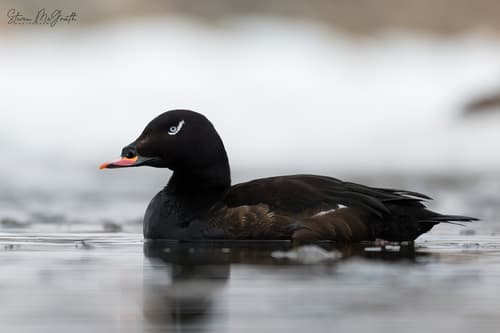
Plumage DetailsAdult males are entirely black with a prominent white crescent below the eye and a large, orange-red bill featuring a black knob at the base and a pinkish tip. Females are dark brown with two indistinct white patches on the face. Both sexes possess a distinctive white speculum (wing patch) visible in flight or when the wings are spread.
Vocalization / CallGenerally quiet, males produce soft, whistling calls during courtship displays. Females emit a harsh, croaking call, particularly when disturbed or with young.
Primary Dietcarnivore
Primary Habitatscoastal, wetland
Conservation Statusleast-concern
Geographic RangeBreeds across northern North America, including Alaska and Canada, primarily in tundra ponds and large freshwater lakes. Winters along both the Pacific and Atlantic coasts of North America, as well as on the Great Lakes.
Identifying FeaturesLarge, all-dark body (male black, female dark brown), White crescent below the eye (male), Large, colorful bill with a prominent knob (male), White wing patch (speculum) visible in flight, Diving behavior
Description
The White-winged Scoter is a large, dark diving duck found in North America. Males are entirely black with a distinctive white crescent below the eye and a colorful bill, while females are duller brown. They are typically seen diving for mollusks and crustaceans in coastal waters or large freshwater bodies.