White-winged Nightjar
NameWhite-winged Nightjar
Common NameWhite-winged Nightjar
Scientific NameEleothreptus candicans
FamilyCaprimulgidae
Wingspan (cm)47.5
Length (cm)20
Weight (g)50.5
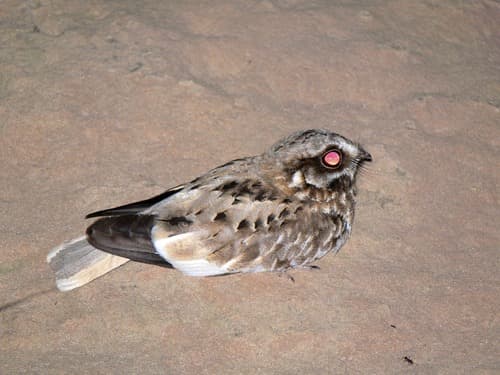
Plumage DetailsMales exhibit pale grey-brown plumage, finely mottled and vermiculated with darker brown and black, providing excellent camouflage. A distinctive feature is the prominent white band across the primary feathers, which is more pronounced in males. Females are similar but generally duller with less extensive white on the wings. Both sexes have large, dark eyes (appearing reddish in the image due to flash reflection) and a short bill surrounded by rictal bristles.
Vocalization / CallThe vocalization of the White-winged Nightjar is typically described as a soft, purring 'prrr-prrr-prrr' or a series of quiet 'chup' notes, often given from the ground or a low perch.
Primary Dietinsectivore
Primary Habitatsgrassland, forest
Conservation Statusendangered
Geographic RangeThe White-winged Nightjar has a highly fragmented distribution, found in disjunct populations across central-southern Brazil, eastern Bolivia, and eastern Paraguay. It inhabits open grasslands and savannas, often near gallery forests or scrubland.
Identifying FeaturesCryptic grey-brown plumage, Prominent white wing patches (especially in males), Large dark eyes, Nocturnal behavior, Ground-dwelling
Description
The White-winged Nightjar is a medium-sized, nocturnal bird known for its highly cryptic plumage, allowing it to blend seamlessly with its surroundings. It is primarily insectivorous, catching flying insects during its active hours at dusk and dawn. This species typically rests motionless on the ground during the day.