White-fronted Honeyeater
NameWhite-fronted Honeyeater
Common NameWhite-fronted Honeyeater
Scientific NamePurnella albifrons
FamilyMeliphagidae
Wingspan (cm)27
Length (cm)17.5
Weight (g)16.5
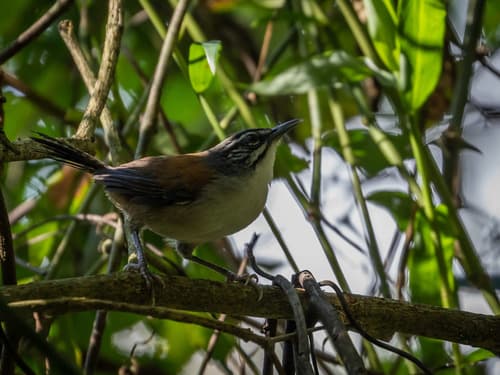
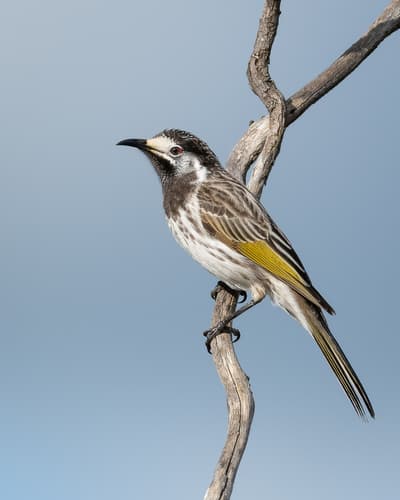
Plumage DetailsOverall grey-brown plumage with a prominent white forehead and supercilium (eyebrow stripe). A distinct black stripe runs through the eye to the bill, bordered by a small yellow patch behind the eye. The underparts are white, heavily streaked with grey-brown, and the flanks may show a yellowish wash. It has a slender, slightly downcurved dark bill and dark legs.
Vocalization / CallVocalizations include a characteristic 'chick-up' or 'chick-chick' contact call, a musical 'twee-twee-twee' song, and various chattering or harsh alarm calls. They are generally quite vocal.
Primary Dietomnivore
Primary Habitatsforest, desert, grassland
Conservation Statusleast-concern
Geographic RangeEndemic to mainland Australia, widely distributed across the arid and semi-arid inland regions, avoiding the tropical north and the wetter coastal areas of the southeast.
Identifying FeaturesWhite forehead and supercilium, Black eye-stripe, Yellow patch behind eye, Streaked white underparts, Slender, downcurved bill
Description
The White-fronted Honeyeater is a medium-sized, active honeyeater endemic to Australia's arid and semi-arid regions. It is easily identified by its distinctive white facial markings and streaked underparts. This species primarily feeds on nectar and insects, often seen foraging in flowering shrubs and trees.