White-capped Bunting
NameWhite-capped Bunting
Common NameWhite-capped Bunting
Scientific NameEmberiza stewarti
FamilyEmberizidae
Wingspan (cm)24
Length (cm)15.5
Weight (g)21.5
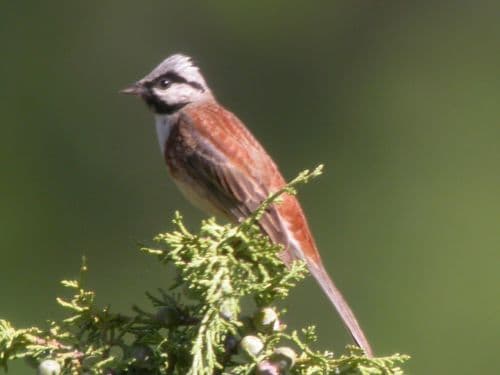
Plumage DetailsMales have a striking white crown, bordered by black lateral crown stripes and a black eye-stripe extending to the ear coverts. A white supercilium is present. The back and rump are reddish-brown, often streaked. Underparts are pale buff to whitish. Females are duller with a streaked crown and less defined facial pattern.
Vocalization / CallThe song is a short, clear, and somewhat hesitant series of notes, often described as 'tsee-tsee-tsee-tew-tew'. Calls include a sharp 'chip' or 'tsip'.
Primary Dietomnivore
Primary Habitatsmountain, grassland
Conservation Statusleast-concern
Geographic RangeBreeds in Central Asia, including Afghanistan, Pakistan, and parts of the Himalayas (India, Nepal). Winters in lower altitudes and adjacent plains.
Identifying Featureswhite crown, black eye-stripe, reddish-brown back, white supercilium, conical bill
Description
A medium-sized bunting characterized by its distinctive head pattern. Males display a prominent white crown, black lateral crown stripes, and a black eye-stripe, contrasting with a reddish-brown back. They typically forage on the ground in arid mountainous regions for seeds and insects.