Western Spinebill
NameWestern Spinebill
Common NameWestern Spinebill
Scientific NameAcanthorhynchus superciliosus
FamilyMeliphagidae
Wingspan (cm)16.5
Length (cm)14
Weight (g)10
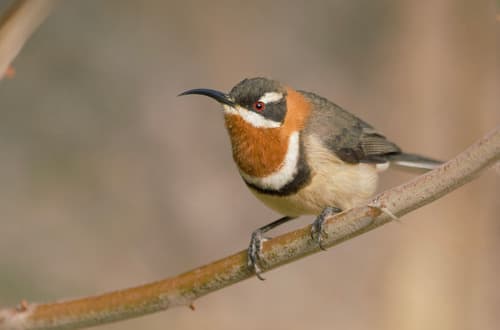
Plumage DetailsThis bird has a dark grey crown, a prominent white supercilium extending from the bill to behind the red eye, and a bright rufous-orange throat and upper breast. Below the rufous, there is a narrow white band followed by a broader black band across the chest. Its back and wings are greyish-brown, and the belly is pale buff or whitish.
Vocalization / CallIts vocalizations typically consist of high-pitched, rapid, tinkling 'chip-chip-chip' or 'tseet' notes, often delivered while foraging.
Primary Dietnectarivore
Primary Habitatsforest, urban
Conservation Statusleast-concern
Geographic RangeEndemic to the south-west of Western Australia, inhabiting eucalypt forests, woodlands, heathlands, and sometimes suburban gardens.
Identifying Featureslong, decurved black bill, prominent white supercilium, rufous-orange throat and upper breast, distinct white and black bands across the chest, red eye
Description
The Western Spinebill is a small, active honeyeater characterized by its long, slender, downcurved bill, perfectly adapted for probing flowers for nectar. It exhibits striking plumage patterns, including a rufous throat and distinct facial markings. This species is often seen darting among flowering shrubs and trees in its native range.