Western Sandpiper
NameWestern Sandpiper
Common NameWestern Sandpiper
Scientific NameCalidris mauri
FamilyScolopacidae
Wingspan (cm)36
Length (cm)16
Weight (g)28
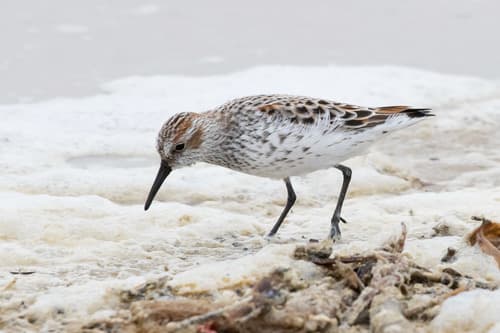
Plumage DetailsIn breeding plumage, it features rufous patches on the ear coverts, crown, and scapulars, with a streaked breast and white belly. Non-breeding birds are plainer, with grayish-brown upperparts and white underparts, often with fine streaking on the breast. It has dark legs and a dark bill that is noticeably drooped at the tip.
Vocalization / CallIts typical call is a high-pitched, reedy 'cheep' or 'kreep', often given in flight or when disturbed.
Primary Dietinsectivore
Primary Habitatscoastal, wetland, tundra
Conservation Statusleast-concern
Geographic RangeBreeds in Arctic Alaska and northeastern Siberia. Migrates along the Pacific and Atlantic coasts of North America, wintering from the southern United States south to Peru and the Caribbean.
Identifying FeaturesSmall size, Relatively long, slightly drooped bill, Dark legs, Rufous patches on head and back in breeding plumage, Active foraging behavior
Description
The Western Sandpiper is a small, active shorebird often seen foraging along coastlines. It uses its relatively long, slightly drooped bill to probe for invertebrates in mud and shallow water, moving with quick, deliberate steps.