Western Meadowlark
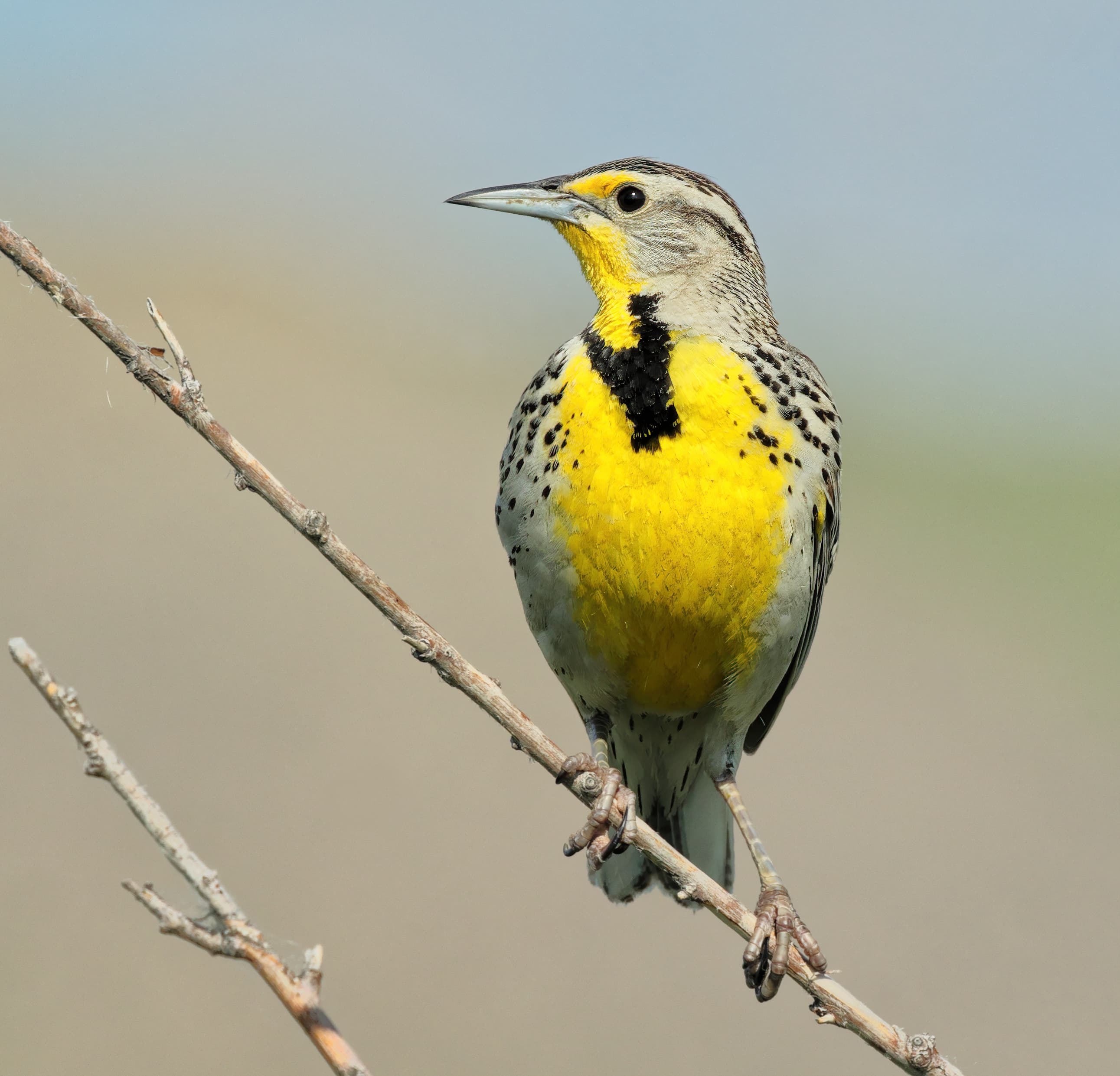
Image: <a href="//commons.wikimedia.org/wiki/User:Cephas" title="User:Cephas">Cephas</a> (CC BY-SA 4.0)
NameWestern Meadowlark
Common NameWestern Meadowlark
Scientific NameSturnella neglecta
FamilyIcteridae
Wingspan (cm)39.5
Length (cm)23.5
Weight (g)100
Plumage DetailsAdults have bright yellow underparts, including the throat and belly, with a prominent black V-shaped band across the chest. The upperparts are streaked brown and black, providing camouflage. The head features a yellow supercilium (stripe above the eye) and a dark eye line, with white outer tail feathers visible during flight.
Vocalization / CallIts song is a distinctive, clear, flute-like series of notes, often described as a gurgling whistle that descends in pitch. Common phrases include 'spring-of-the-year' or 'I-can't-see-you'. It also produces a sharp 'chupp' call.
Primary Dietomnivore
Primary Habitatsgrassland, prairie, agricultural fields, pastures
Conservation Statusleast-concern
Geographic RangeBreeds across western and central North America, from southern Canada through the western and central United States, and into northern Mexico. It winters in the southern parts of its breeding range, often migrating short distances.
Identifying Featuresbright yellow breast with black V-band, streaked brown and black upperparts, flute-like, gurgling song, long, pointed bill, white outer tail feathers (visible in flight)
Description
The Western Meadowlark is a medium-sized songbird known for its striking yellow breast with a prominent black V-shaped band. It inhabits open grasslands and fields, where its distinctive flute-like song is a common sound.