Western Cattle-Egret
NameWestern Cattle-Egret
Common NameWestern Cattle-Egret
Scientific NameBubulcus ibis
FamilyArdeidae
Wingspan (cm)92
Length (cm)51
Weight (g)350
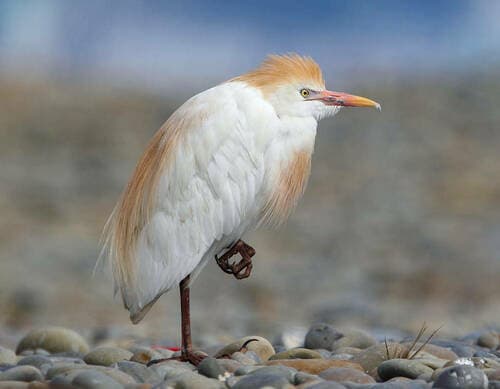
Plumage DetailsAdults are predominantly white. During the breeding season, they display buff-orange plumes on the crown, nape, and lower back, with a buff wash on the breast. The bill is yellow, and legs are yellowish-brown, often turning reddish during breeding.
Vocalization / CallGenerally quiet, but produces harsh, croaking, grunting, and hissing sounds, particularly within breeding colonies.
Primary Dietinsectivore
Primary Habitatsgrassland, wetland, urban
Conservation Statusleast-concern
Geographic RangeNative to Africa, Europe, and Asia, the Western Cattle-Egret has significantly expanded its range and is now found on all continents except Antarctica, including the Americas and Australia.
Identifying FeaturesSmall, stocky white egret, Buff-orange breeding plumage on head, neck, and back, Yellow bill and yellowish legs (can be reddish in breeding), Often seen foraging near grazing livestock, Relatively short neck and stout bill compared to other egrets
Description
The Western Cattle-Egret is a small, stocky white heron often found in close association with grazing livestock. During the breeding season, it develops distinctive buff-orange plumes on its head, neck, and back. It primarily forages for insects disturbed by large animals.