Western Capercaillie
NameWestern Capercaillie
Common NameWestern Capercaillie
Scientific NameTetrao urogallus
FamilyPhasianidae
Wingspan (cm)100
Length (cm)70
Weight (g)4500
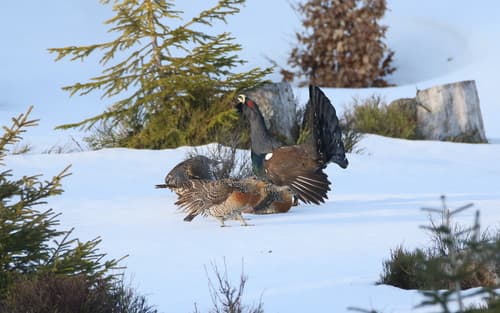
Plumage DetailsMales have dark, iridescent blue-green breast feathers, dark brown wings with a white shoulder patch, a long fanned tail, and prominent red wattles above their eyes. Females are smaller, cryptically patterned with barred brown, black, and rufous plumage, often with a distinct rufous patch on the breast.
Vocalization / CallMales produce a distinctive lekking call during breeding season, a complex series of clicks, pops, and gurgles often described as 'gobbling' or 'cork-popping' sounds, culminating in a loud 'sneeze'. Females have a quieter 'kok-kok' call.
Primary Dietomnivore
Primary Habitatsforest, mountain
Conservation Statusleast-concern
Geographic RangeFound across the Palearctic region, from Scotland and Scandinavia eastward through northern Europe and Russia to Siberia, inhabiting suitable coniferous and mixed forest habitats.
Identifying FeaturesLarge size (largest grouse), Pronounced sexual dimorphism, Male's iridescent dark plumage and fanned tail, Male's red wattle above eye, Female's barred brown camouflage plumage, Lekking behavior in spring
Description
The Western Capercaillie is the largest member of the grouse family, known for its striking sexual dimorphism. Males are large and dark with iridescent plumage, while females are smaller and camouflaged with barred brown feathers. They are typically found in old-growth coniferous forests, especially during their elaborate lekking displays in spring.