Western Bowerbird
NameWestern Bowerbird
Common NameWestern Bowerbird
Scientific NameChlamydera guttata
FamilyPtilonorhynchidae
Wingspan (cm)37.5
Length (cm)26
Weight (g)125
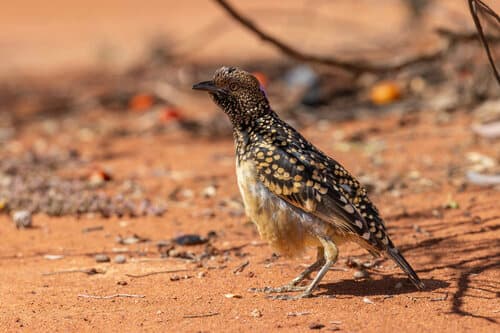
Plumage DetailsUpperparts are dark brown to black, heavily spotted with buff or golden-yellow, giving a 'guttated' appearance. Underparts are paler, buffy-white, often with some spotting on the flanks. Males possess a small, erectile nuchal crest of iridescent lilac-pink feathers, which is often concealed.
Vocalization / CallVocalizations are varied and complex, including harsh rasps, churring, hissing, and a remarkable ability to mimic the calls of other birds, animals, and even human-made sounds.
Primary Dietomnivore
Primary Habitatsdesert, forest
Conservation Statusleast-concern
Geographic RangeEndemic to arid and semi-arid regions of Western and Central Australia, primarily inhabiting rocky ranges, gorges, and adjacent woodlands and scrublands.
Identifying FeaturesDistinctive spotted brown and yellow plumage, Iridescent lilac-pink nuchal crest (males, often concealed), Known for building and decorating bowers, Complex vocalizations including mimicry, Found in arid and semi-arid Australian landscapes
Description
The Western Bowerbird is a medium-sized bird endemic to arid and semi-arid regions of Australia. Males are known for constructing elaborate bowers decorated with various objects to attract mates. Their plumage provides excellent camouflage in their rocky and scrubby habitats.