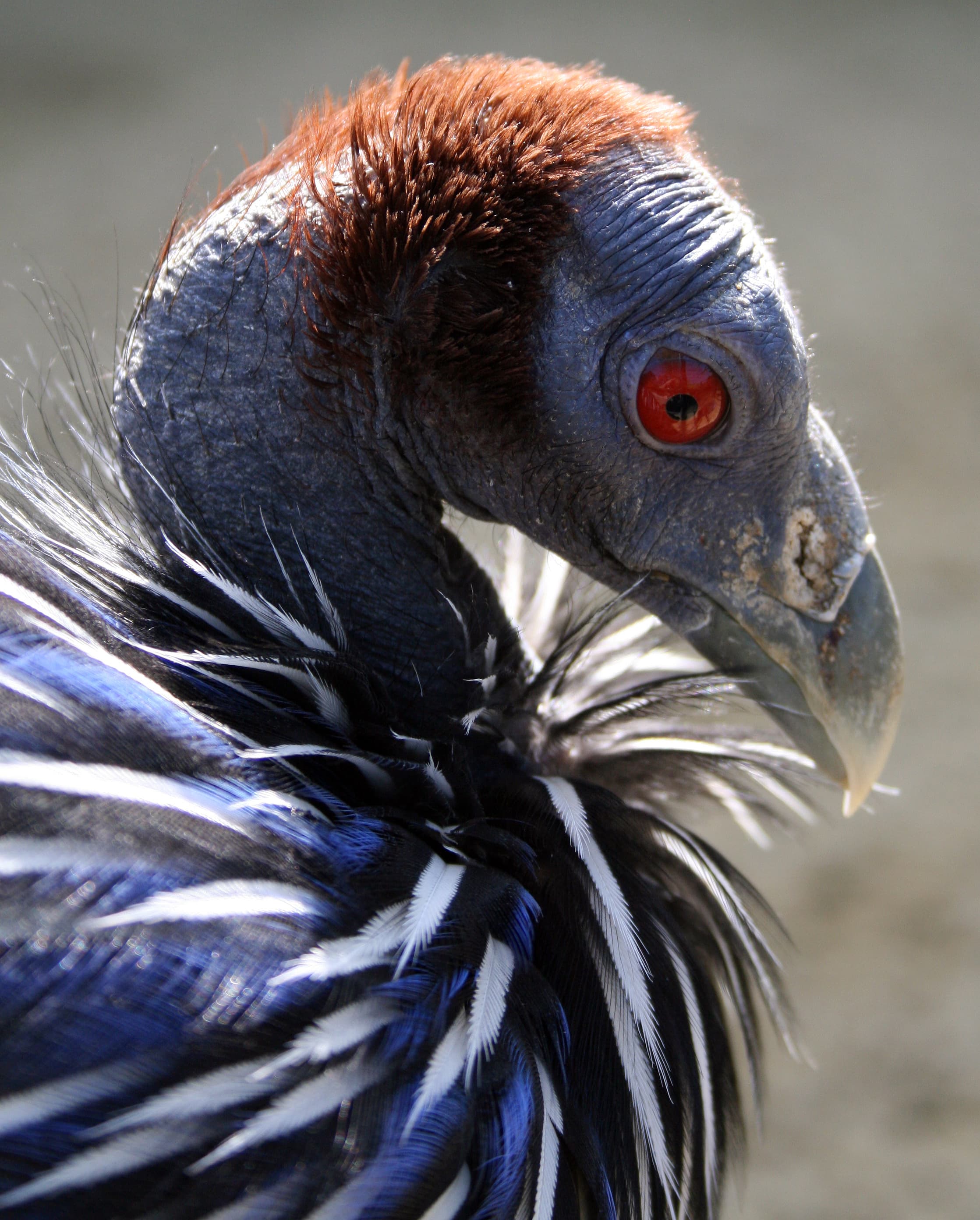
Vulturine Guineafowl
Image: Manfred Werner / <a href="//commons.wikimedia.org/wiki/User:Tsui" title="User:Tsui">Tsui</a> (CC BY-SA 3.0)
NameVulturine Guineafowl
Common NameVulturine Guineafowl
Scientific NameAcryllium vulturinum
FamilyNumididae
Wingspan (cm)90
Length (cm)66
Weight (g)1300
Plumage DetailsThe head and upper neck are largely bare, featuring wrinkled blue-grey skin, with a distinctive patch of short, bristly reddish-brown feathers on the crown. The eyes are bright red. The body plumage is a striking pattern of iridescent cobalt blue, black, and white stripes, particularly prominent on the breast and mantle, with long, hackle-like feathers extending from the lower neck.
Vocalization / CallVulturine Guineafowl produce a harsh, chattering call, often described as a rapid series of 'chick-chick-chick' notes followed by a grating 'churrrrr'. They also emit loud alarm calls when disturbed.
Primary Dietomnivore
Primary Habitatsdry bushland, savanna, semi-desert, thorn scrub
Conservation Statusleast-concern
Geographic RangeNative to northeastern Africa, its range extends through Ethiopia, Somalia, Kenya, Tanzania, and Uganda, typically inhabiting arid and semi-arid regions.
Identifying Featuresbare blue-grey head and neck, reddish-brown crown patch, bright red eyes, striking blue, black, and white striped body plumage, long, hackle-like neck feathers
Description
The Vulturine Guineafowl is a large, striking ground-dwelling bird characterized by its bare, blue-grey head and neck, topped with a patch of reddish-brown down. Its body plumage features brilliant blue, black, and white stripes, making it one of the most visually distinctive guineafowl species. They are social birds, often found foraging in large flocks in their arid habitats.