Tibetan Sandgrouse
NameTibetan Sandgrouse
Common NameTibetan Sandgrouse
Scientific NameSyrrhaptes tibetanus
FamilyPteroclidae
Wingspan (cm)56
Length (cm)35.5
Weight (g)325
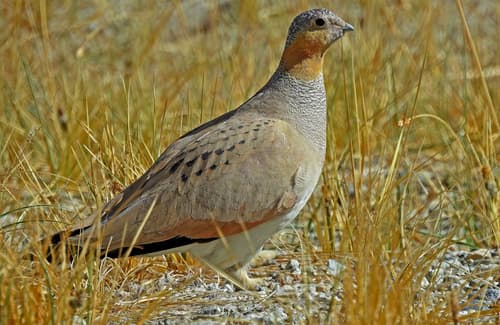
Plumage DetailsUpperparts are sandy-buff to greyish-brown with fine dark barring and spots, providing excellent camouflage. The head and neck are pale grey, often with an orange-buff wash on the throat and sides of the neck. Underparts are white, with a distinctive black belly patch (more prominent in males) and a long, pointed tail.
Vocalization / CallA distinctive, far-carrying, rather mournful 'kwa-kwa-kwa' or 'kwa-kwa-kwa-kwa-kwa' call, often given in flight.
Primary Dietgranivore
Primary Habitatsmountain, grassland
Conservation Statusleast-concern
Geographic RangeEndemic to the Tibetan Plateau and surrounding high-altitude regions of Central Asia, including parts of Tibet, China, India (Ladakh), Nepal, Bhutan, and Pakistan.
Identifying FeaturesCryptic sandy-buff and grey plumage, Orange-buff wash on throat and neck, Long, pointed tail, Feathered tarsi and toes, Black belly patch (especially males), Inhabits high-altitude arid environments
Description
The Tibetan Sandgrouse is a medium-sized, ground-dwelling bird perfectly camouflaged for its high-altitude arid habitat. It is known for its cryptic plumage and long, pointed tail, often seen foraging for seeds in flocks.