Spotted Redshank
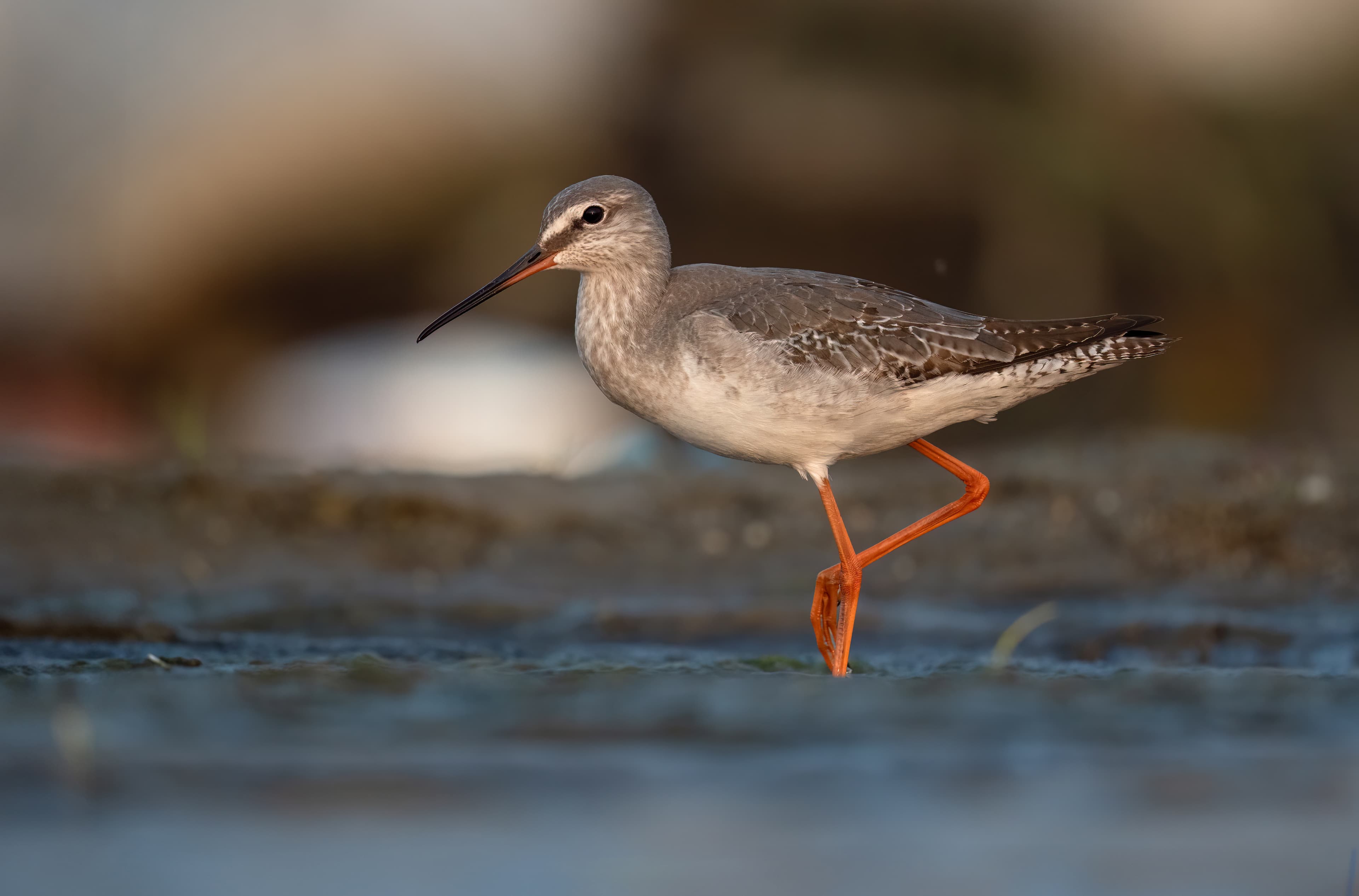
Image: <a href="//commons.wikimedia.org/wiki/User:Mildeep" title="User:Mildeep">Mildeep</a> (CC BY-SA 4.0)
NameSpotted Redshank
Common NameSpotted Redshank
Scientific NameTringa erythropus
FamilyScolopacidae
Wingspan (cm)64
Length (cm)31
Weight (g)150
Plumage DetailsIn non-breeding plumage, the upperparts are grey with fine dark spotting and streaking, especially on the mantle and wings, while the underparts are white. The bill is long and black, often with a reddish base, and the legs are bright orange-red. During the breeding season, adults undergo a dramatic change, becoming almost entirely sooty black with fine white spotting, except for the white undertail coverts.
Vocalization / CallIts most characteristic call is a clear, piping "chew-eet" or "tew-ee" often given in flight. It also produces a rapid, trilling alarm call when disturbed.
Primary Dietinsectivore
Primary Habitatswetlands, marshes, mudflats, estuaries, lakeshores, tundra
Conservation Statusleast-concern
Geographic RangeBreeds across the Arctic tundra and taiga zones of northern Eurasia, from Scandinavia eastward across Siberia. It winters extensively in coastal wetlands and inland freshwater habitats throughout southern Europe, Africa, and southern Asia, including India and Southeast Asia.
Identifying Featureslong, slender orange-red legs, long, straight to slightly down-curved black bill (often reddish base in non-breeding), grey upperparts and white underparts in non-breeding plumage, distinctive sooty-black breeding plumage, white rump visible in flight, clear piping call
Description
The Spotted Redshank is a medium-sized wader characterized by its long, slender orange-red legs and a long, straight to slightly down-curved bill. In non-breeding plumage, as seen here, it is largely grey above and white below, contrasting sharply with its striking sooty-black breeding attire. This species typically forages in shallow water, probing for invertebrates.