Solitary Sandpiper
NameSolitary Sandpiper
Common NameSolitary Sandpiper
Scientific NameTringa solitaria
FamilyScolopacidae
Wingspan (cm)40.5
Length (cm)19.5
Weight (g)40
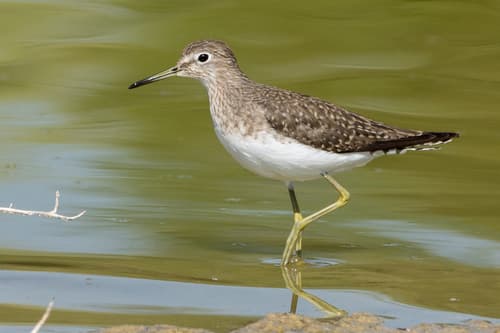
Plumage DetailsUpperparts are dark olive-brown with fine white spotting, particularly on the back and wings. The underparts are white, with fine streaking on the breast and flanks. It has a prominent white eye-ring, a dark line through the eye, and a faint pale supercilium. The bill is slender and dark, and the legs are dull greenish-yellow.
Vocalization / CallA distinctive, high-pitched, clear 'peet-weet' or 'peet-weet-weet' call, often given in flight.
Primary Dietinsectivore
Primary Habitatswetland, forest
Conservation Statusleast-concern
Geographic RangeBreeds in the boreal forests of Alaska and Canada. Migrates through most of North America, and winters in Central and South America, from Mexico south to Argentina.
Identifying FeaturesDark olive-brown back with fine white spots, Prominent white eye-ring, Greenish-yellow legs, Often seen alone (solitary behavior), Distinctive head-bobbing motion, White outer tail feathers with dark barring
Description
A medium-sized shorebird, the Solitary Sandpiper is characterized by its dark olive-brown back finely spotted with white and a contrasting white belly. It typically forages alone in freshwater habitats, often bobbing its head and tail while searching for food.