Singing Honeyeater
NameSinging Honeyeater
Common NameSinging Honeyeater
Scientific NameGavicalis virescens
FamilyMeliphagidae
Wingspan (cm)25
Length (cm)20
Weight (g)27.5
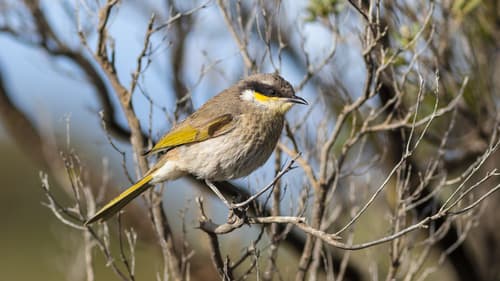
Plumage DetailsUpperparts are olive-brown, while the underparts are pale grey-brown with faint streaking. A prominent black stripe runs through the eye, bordered above by a pale stripe and below by a bright yellow streak that curves upwards behind the eye. There is also a yellow patch visible on the wing edge.
Vocalization / CallKnown for its varied and melodious calls, which include a loud, clear 'prrp prrp prrp' or 'chur-chur-chur', as well as a range of softer whistles and trills.
Primary Dietomnivore
Primary Habitatsforest, grassland, wetland, desert, urban, coastal
Conservation Statusleast-concern
Geographic RangeWidespread across most of Australia, including Tasmania, except for the far north and some parts of the east coast. Also found in southern New Guinea.
Identifying Featuresyellow streak behind eye, dark eye-stripe, olive-brown upperparts, pale streaked underparts, yellow patch on wing
Description
The Singing Honeyeater is a medium-sized, highly adaptable bird known for its distinctive yellow streak behind the eye. It is commonly found across a wide range of Australian habitats, foraging for nectar, insects, and fruits. This species is often heard before it is seen, thanks to its varied and melodious calls.