Semipalmated Plover
NameSemipalmated Plover
Common NameSemipalmated Plover
Scientific NameCharadrius semipalmatus
FamilyCharadriidae
Wingspan (cm)45
Length (cm)18
Weight (g)50
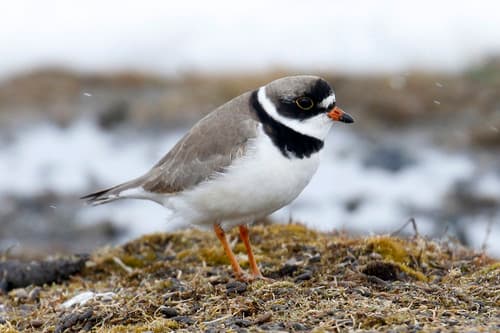
Plumage DetailsAdults have a brown back and wings, white underparts, and a prominent single black breast band. The head features a black cap, a white forehead, a black eye-stripe, and a white supercilium. Its legs are bright orange, and the bill is short, black-tipped, and orange at the base.
Vocalization / CallIts most common call is a clear, whistled 'che-wee' or 'too-WEE', often given in flight or when alarmed. It also produces a rapid series of 'pip' notes.
Primary Dietinsectivore
Primary Habitatscoastal, wetland, tundra
Conservation Statusleast-concern
Geographic RangeBreeds in the Arctic tundra of North America and migrates south to winter along the coasts of North and South America, from the southern United States down to Patagonia.
Identifying Featuressingle black breast band, orange legs, bicolored bill (orange base, black tip), black and white head pattern (black cap, white forehead, black eye-stripe)
Description
The Semipalmated Plover is a small, stocky shorebird often found foraging on beaches and mudflats. It employs a characteristic 'run-stop-peck' feeding strategy, darting to catch small invertebrates. This species is known for its distinctive single black breast band.