Rufous-backed Bunting
NameRufous-backed Bunting
Common NameRufous-backed Bunting
Scientific NameEmberiza jankowskii
FamilyEmberizidae
Wingspan (cm)26
Length (cm)15.5
Weight (g)21.5
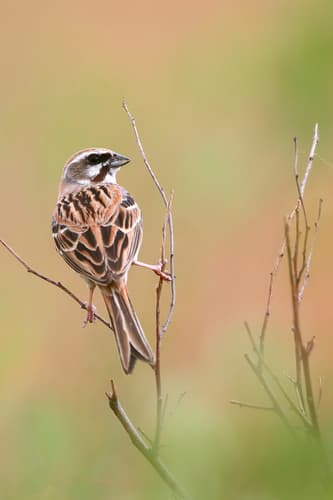
Plumage DetailsMales exhibit a prominent head pattern with a white supercilium, black eye-stripe, and a white malar stripe contrasting with a black throat. The crown and nape are greyish-brown, while the back is rufous with heavy dark streaking. Underparts are whitish, often with rufous wash on the flanks. Females are generally duller.
Vocalization / CallIts vocalizations include a short, sharp 'tsip' call and a simple, repetitive song.
Primary Dietgranivore
Primary Habitatsgrassland
Conservation Statuscritically-endangered
Geographic RangeThe Rufous-backed Bunting has an extremely restricted breeding range in northeastern China (Inner Mongolia) and historically in southeastern Russia. Its wintering grounds are also confined to a small area within China.
Identifying FeaturesDistinctive head pattern (white supercilium, black eye-stripe, white malar, black throat in males), Rufous back with dark streaking, Pale underparts with rufous flanks, Ground-dwelling behavior
Description
This medium-sized bunting is characterized by its distinctive head pattern and rufous back. It is typically found foraging on the ground in open, grassy habitats, often near water sources. Its striking plumage makes it a recognizable, though critically endangered, species.