Rose-breasted Grosbeak
NameRose-breasted Grosbeak
Common NameRose-breasted Grosbeak
Scientific NamePheucticus ludovicianus
FamilyCardinalidae
Wingspan (cm)30.5
Length (cm)19
Weight (g)44
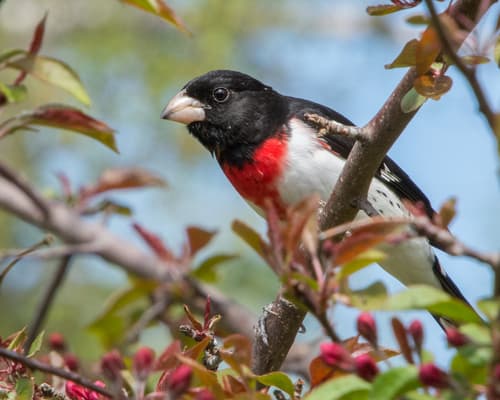
Plumage DetailsAdult males have a black head, back, and wings, with prominent white wing patches. A distinctive rose-red patch adorns the breast, contrasting sharply with the white belly. Females are streaky brown above, white below with brown streaks, and have a strong white eyebrow stripe.
Vocalization / CallThe song is a rich, melodious, warbling whistle, often compared to a robin's song but more refined. The call note is a sharp, metallic 'chink' or 'peek'.
Primary Dietomnivore
Primary Habitatsforest, urban
Conservation Statusleast-concern
Geographic RangeBreeds across southern Canada and the eastern United States, primarily in deciduous and mixed forests. Winters from southern Mexico through Central America and into northern South America.
Identifying FeaturesMale: Black head and back with a bright rose-red breast patch, Male: Large white wing patches, Both sexes: Large, conical, pale bill, Female: Streaky brown plumage with a prominent white eyebrow, Distinctive 'chink' call note
Description
The Rose-breasted Grosbeak is a medium-sized songbird known for its striking plumage. Males feature a bold black, white, and rose-red pattern, while females are streaky brown. They are often found in deciduous and mixed forests, where they forage for insects, seeds, and fruits.