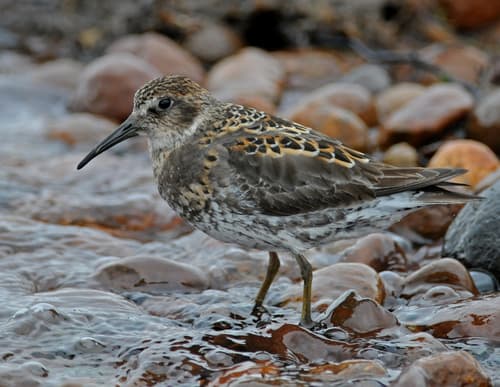
Rock Sandpiper
NameRock Sandpiper
Common NameRock Sandpiper
Scientific NameCalidris ptilocnemis
FamilyScolopacidae
Wingspan (cm)43
Length (cm)22
Weight (g)85
Plumage DetailsIn non-breeding plumage, as seen in the image, the Rock Sandpiper has mottled brown and grey upperparts with a scaly pattern on the back. The underparts are pale with dark streaking and spotting on the breast and flanks. Breeding plumage features a distinctive black belly patch and richer rufous tones on the back.
Vocalization / CallIts vocalizations include a harsh, grating 'kree' or 'krr-krr' call, often given in flight or when disturbed. They also produce a soft 'whit' or 'chup' call.
Primary Dietcarnivore
Primary Habitatscoastal, tundra
Conservation Statusleast-concern
Geographic RangeBreeds in the Arctic and subarctic regions of North America (Alaska) and northeastern Asia (Siberia and Bering Sea islands). Winters along the rocky coasts of the North Pacific, from Alaska south to California and along the coasts of Japan and Korea.
Identifying FeaturesStocky build, Slightly decurved bill, Yellow legs, Mottled brown and grey plumage (non-breeding), Black belly patch (breeding plumage), Prefers rocky shorelines
Description
The Rock Sandpiper is a stocky, medium-sized shorebird often found foraging on rocky coastlines. It has a relatively short, slightly decurved bill and yellow legs, adapting well to its rugged coastal habitat. This species is known for its hardy nature, enduring harsh Arctic and subarctic conditions.