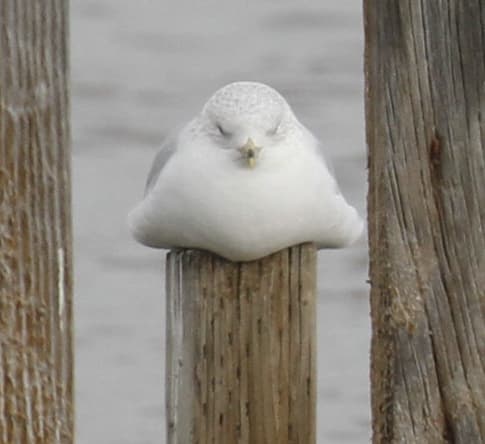
Ring-billed Gull
NameRing-billed Gull
Common NameRing-billed Gull
Scientific NameLarus delawarensis
FamilyLaridae
Wingspan (cm)111
Length (cm)45
Weight (g)500
Plumage DetailsAdult Ring-billed Gulls have a white head, body, and tail, with a pale gray back and upperwings. Their primary wingtips are black with white spots. The legs are yellow, and the most distinctive feature is the yellow bill with a prominent black ring near the tip.
Vocalization / CallVocalizations include a variety of loud, high-pitched calls, often described as 'kyow', 'kree-ah', and 'ha-ha-ha' alarm calls. They are generally noisy birds, especially in colonies or when competing for food.
Primary Dietomnivore
Primary Habitatscoastal, lakes, rivers, agricultural fields, urban, landfills, parking lots
Conservation Statusleast-concern
Geographic RangeBreeds across Canada and the northern United States, migrating south to winter along the coasts of the United States, Mexico, and the Caribbean. Some populations also winter inland on large bodies of water.
Identifying FeaturesYellow bill with a prominent black ring, Yellow legs, Pale gray back and upperwings, White head and underparts, Black primary wingtips with white spots
Description
The Ring-billed Gull is a medium-sized gull commonly found across North America, often seen in large flocks near water bodies and urban environments. They are highly adaptable and opportunistic feeders, frequently foraging in diverse habitats from coasts to parking lots. This species is characterized by its distinctive bill and widespread presence.