Plains-wanderer
NamePlains-wanderer
Common NamePlains-wanderer
Scientific NamePedionomus torquatus
FamilyPedionomidae
Wingspan (cm)32
Length (cm)17
Weight (g)67.5
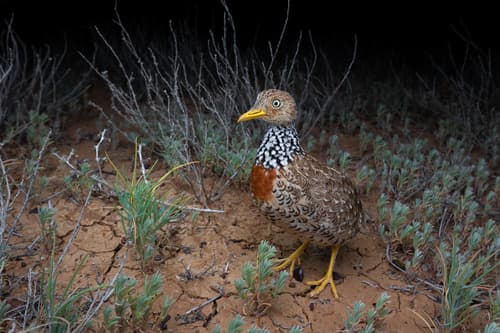
Plumage DetailsFemales are more brightly colored, featuring a distinctive black-and-white spotted collar and a prominent rufous (chestnut) patch on the breast. The body plumage is mottled brown and buff, providing excellent camouflage, while the bill and legs are bright yellow. Males are duller with less prominent markings.
Vocalization / CallVocalizations include a soft, low 'oom' or 'coo' call, often repeated, particularly by the female during the breeding season to attract a mate.
Primary Dietomnivore
Primary Habitatsgrassland
Conservation Statuscritically-endangered
Geographic RangeEndemic to south-eastern Australia, primarily found in fragmented populations across native temperate grasslands in northern Victoria and parts of New South Wales, with historical records extending to Queensland and South Australia.
Identifying FeaturesDistinctive black-and-white spotted collar (more prominent in females), Prominent rufous breast patch (more prominent in females), Bright yellow bill and legs, Upright, quail-like posture, Mottled brown and buff camouflage
Description
The Plains-wanderer is a small, quail-like ground bird endemic to Australia, known for its unique taxonomic position and cryptic behavior. It walks with an upright posture, often freezing when disturbed, and is primarily active at dawn and dusk.