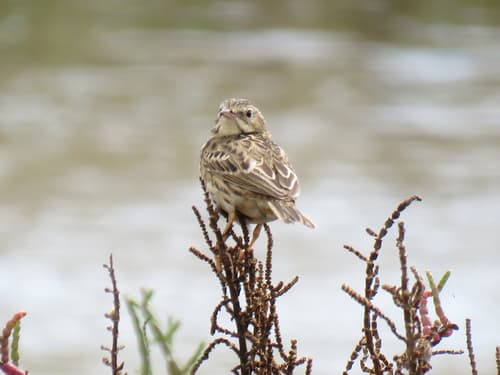
Peruvian Pipit
NamePeruvian Pipit
Common NamePeruvian Pipit
Scientific NameAnthus peruvianus
FamilyMotacillidae
Wingspan (cm)24.5
Length (cm)14.5
Weight (g)21.5
Plumage DetailsUpperparts are streaky brown with darker centers to feathers and paler edges, giving a mottled appearance. Underparts are buffy white with distinct dark streaking on the breast and flanks. It features a pale supercilium above a dark eye-line and a relatively plain face.
Vocalization / CallIts vocalizations typically include a thin, high-pitched 'tsip' or 'tseep' call, often given in flight. The song is a series of varied chirps and trills, usually delivered during display flights.
Primary Dietinsectivore
Primary Habitatsdesert, coastal, grassland
Conservation Statusleast-concern
Geographic RangeEndemic to the coastal plain of Peru, ranging from the Lambayeque region in the north southwards to the Tacna region near the Chilean border.
Identifying FeaturesStreaky brown plumage, Pale supercilium, Terrestrial foraging behavior, Found in arid coastal regions of Peru, Relatively long hind claw (typical of pipits)
Description
The Peruvian Pipit is a small, streaky brown passerine endemic to the coastal regions of Peru. It is typically found foraging on the ground in open, arid habitats, often near water sources. Its plumage provides excellent camouflage against the sandy and scrubby terrain.