Paradise Shelduck
NameParadise Shelduck
Common NameParadise Shelduck
Scientific NameTadorna variegata
FamilyAnatidae
Wingspan (cm)75
Length (cm)67
Weight (g)1600
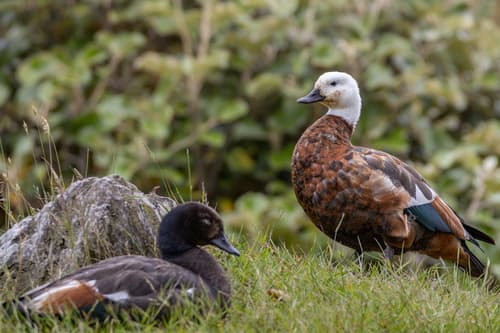
Plumage DetailsFemales have a white head and neck, with a rich chestnut-brown body. Males are mostly dark sooty-brown with a darker head. Both sexes display a prominent white patch on the forewing and an iridescent green speculum, visible during flight and sometimes at rest.
Vocalization / CallFemales produce a loud, high-pitched 'zeek-zeek' or 'honk-honk' call, especially when alarmed or in flight. Males have a deeper, quieter 'honk' or 'hark' call.
Primary Dietomnivore
Primary Habitatsgrassland, wetland, urban
Conservation Statusleast-concern
Geographic RangeEndemic to New Zealand, found throughout both the North and South Islands, including Stewart Island. They are common in open country, agricultural land, and near freshwater bodies.
Identifying FeaturesStrong sexual dimorphism, Female: white head, chestnut body, Male: dark sooty-brown plumage, Large, goose-like build, Prominent white wing patches and green speculum on both sexes
Description
The Paradise Shelduck is a large, goose-like duck endemic to New Zealand, known for its striking sexual dimorphism. Females have a distinctive white head and chestnut body, while males are predominantly dark sooty-brown. They are often found grazing in open grasslands and wetlands.