Oriental Plover
NameOriental Plover
Common NameOriental Plover
Scientific NameCharadrius veredus
FamilyCharadriidae
Wingspan (cm)61
Length (cm)25
Weight (g)100
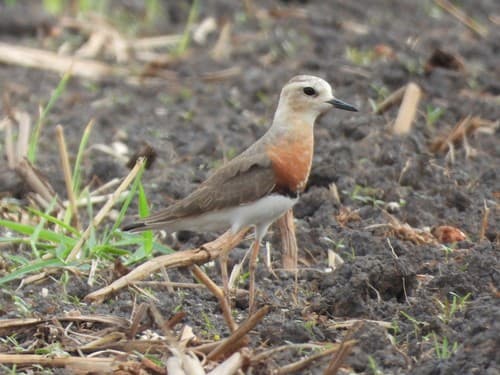
Plumage DetailsBreeding males display a distinctive rufous breast band, bordered below by a thin black line, with white underparts and brown upperparts. They have a pale face with a dark eye-stripe. Females and non-breeding birds are duller, lacking the strong rufous and black breast bands, appearing more uniformly brownish-grey above and whitish below.
Vocalization / CallIts vocalizations include a sharp, high-pitched 'chip' or 'kew-wit' call, often given in flight or when disturbed.
Primary Dietinsectivore
Primary Habitatsgrassland
Conservation Statusleast-concern
Geographic RangeBreeds in the steppes and semi-deserts of central Asia, including Mongolia, southern Siberia, and northern China. It migrates south to winter in Southeast Asia, Indonesia, Papua New Guinea, and northern and eastern Australia.
Identifying FeaturesLong legs and slender body for a plover, Distinctive rufous breast band with a black lower border in breeding males, Pale face with a dark eye-stripe, Brown upperparts and white underparts, Prefers dry, open habitats
Description
The Oriental Plover is a medium-sized migratory shorebird with long legs, known for its extensive migrations between its breeding grounds in Central Asia and wintering grounds in Australia. It typically forages in open, dry habitats, often in flocks.