Mute Swan
NameMute Swan
Common NameMute Swan
Scientific NameCygnus olor
FamilyAnatidae
Wingspan (cm)220
Length (cm)150
Weight (g)10500
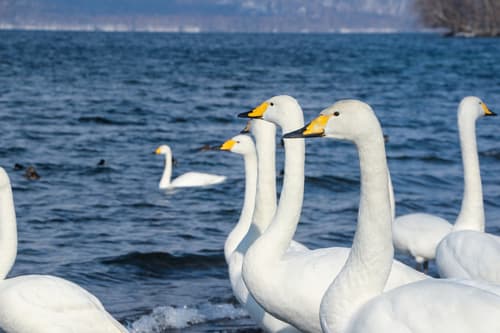
Plumage DetailsAdult Mute Swans have entirely white plumage. Their bill is distinctively orange with a prominent black knob at the base, which is larger in males (cobs). Juveniles (cygnets) are typically grey-brown and gradually attain white plumage over their first year.
Vocalization / CallMute Swans are generally quiet, making soft grunting or snorting sounds. When threatened, they produce a loud hiss. Their wings create a distinctive, resonant 'whoosh-whoosh' sound during flight.
Primary Dietomnivore
Primary Habitatslakes, ponds, rivers, estuaries, coastal lagoons, marshes
Conservation Statusleast-concern
Geographic RangeNative to temperate regions of Eurasia, the Mute Swan has been widely introduced and established in North America, Australia, New Zealand, and parts of southern Africa. It is a common resident in many urban and rural waterways.
Identifying FeaturesS-curved neck posture, Orange bill with a prominent black knob, Pure white plumage (adults), Distinctive 'whoosh' sound of wings in flight, Generally quiet vocalizations
Description
The Mute Swan is a large, elegant waterbird characterized by its graceful S-curved neck and pure white plumage. It is often considered one of the most beautiful swan species, frequently found in parks and waterways across its range. Despite its name, it is not entirely mute, but generally less vocal than other swan species.