Mallard Duck
NameMallard Duck
Common NameMallard
Scientific NameAnas platyrhynchos
FamilyAnatidae
Wingspan (cm)90
Length (cm)57.5
Weight (g)1150
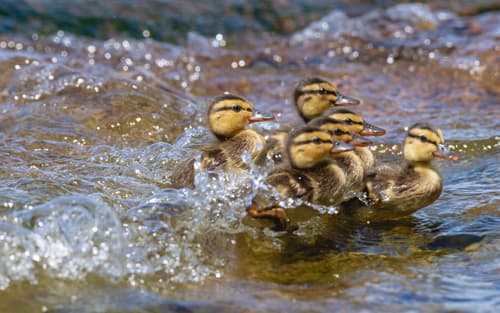
Plumage DetailsAdult males (drakes) have a glossy, iridescent green head and neck, a white neck ring, a chestnut breast, grey flanks, and a dark curly tail feather. Females (hens) are mottled brown with an orange bill and a dark eye-stripe. Both sexes have a distinctive iridescent blue speculum (wing patch) bordered by white.
Vocalization / CallThe female Mallard produces the iconic loud 'quack' call, often in a series. Males have a softer, rasping 'rab-rab' call and a whistle.
Primary Dietomnivore
Primary Habitatswetlands, ponds, lakes, rivers, marshes, urban parks
Conservation Statusleast-concern
Geographic RangeMallards have a wide distribution across the Northern Hemisphere, including North America, Europe, Asia, and parts of North Africa. They have also been introduced to other regions worldwide.
Identifying FeaturesMale's iridescent green head, Female's mottled brown plumage, Blue speculum on wing (visible in flight or at rest), Dabbling feeding behavior, Orange bill (brighter in males, duller in females)
Description
The Mallard is a common and widespread dabbling duck known for its distinctive sexual dimorphism. Males boast iridescent green heads, while females are mottled brown. They are highly adaptable birds, often found in various aquatic environments where they feed by tipping forward to graze on vegetation and small invertebrates.